

White or gray: bacterial bloom
Common in a new tank, after a big clean or when food rots. Watch the fish first: fish gasping at the surface are short of oxygen, so increase the surface movement at once. Gasping at the surface. Leave the filter media alone: scrubbing or replacing it removes the bacteria that clear the haze. Test ammonia and nitrite: if either reads above 0 with fish in the tank, change water to bring it down; otherwise feed lightly and let the haze clear. What your readings mean · Cycling.
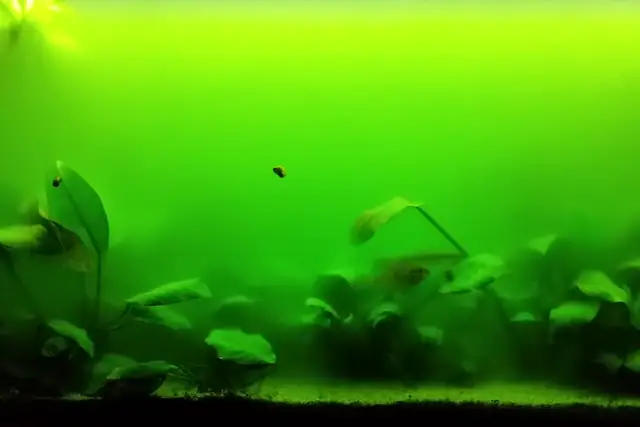
Green: algae in the water
Free-floating algae turn the water pea green, usually from long light hours, sunlight or extra nutrients. Shorten the light, keep the tank out of direct sun, and change water; a few days of complete darkness or a UV sterilizer clears stubborn cases. Green water.
Brown or yellow: tannins
Driftwood, leaves and some plant soils leach tannins that stain the water like tea. Fish from soft, acid rivers like it. To clear it, boil or soak new wood before use, change water, and add activated carbon to the filter.
Right after filling: substrate dust
Fine particles from unwashed gravel or sand settle within a day or two with the filter running. Rinse new substrate until the water runs nearly clear, and pour water onto a plate or bag when filling. Decor and substrate.