
Which algae do you see?
Match what is in your tank to a drawing, and to a real photo where we have a clear one. Each one leads to its cause, how to remove it today and how to stop it coming back. Some algae in a tank is normal; a sudden bloom means light, nutrients or flow are out of balance.
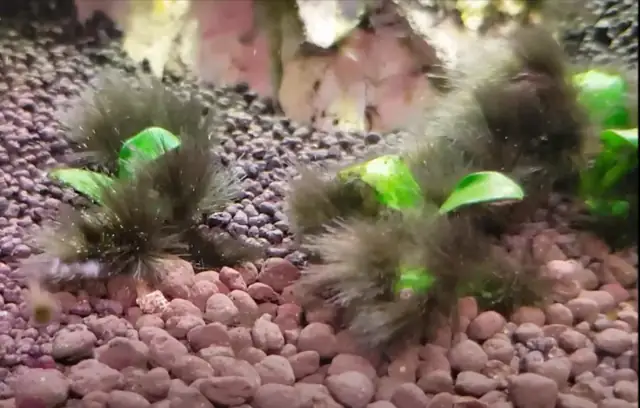
Black beard algae
Dark gray to black tufts on leaf edges, wood and equipment
Brown diatom algae
Brown dusty film on glass, plants and sand, common in new tanks
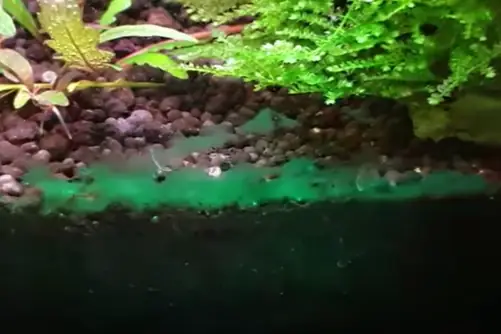
Blue-green algae (cyanobacteria)
Slimy blue-green or dark sheets that peel off, with a musty smell
Hair algae
Long green strands on plants, decor and moss
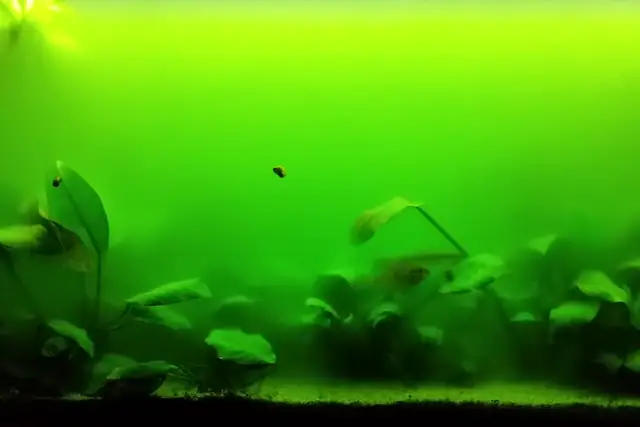
Green water
The whole tank turns pea-soup green
Green spot algae
Hard green dots on the glass and on slow-growing leaves
Before you treat anything
Test the water: ammonia, nitrite and nitrate tell you whether waste is feeding the algae. See what your readings mean. Then check the light: sunlight from a window, or more light than the plants can use, feeds algae. Light works together with nutrients and CO₂, so there is no single safe number of hours; 6 to 8 hours a day is a common starting point.
Algae eaters help but do not fix the cause: compare algae-eating fish, shrimp and snails.
Not algae? Cloudy white or brown water, white worms, flatworms on the glass, tiny tentacled polyps, a sudden plague of small snails or a bad smell each have their own guide.
Photo credits
Real photographs from Wikimedia Commons, resized and cropped to fit; each is used under the license named.
- Black beard algae Emboli, CC BY 3.0, via Wikimedia Commons
- Blue-green algae (cyanobacteria) Emboli, CC BY 3.0, via Wikimedia Commons
- Green water Russel Leidich/dangerousfishbowl, CC BY 3.0, via Wikimedia Commons


