
Bloating and dropsy
A swollen belly or raised scales.
A belly far rounder than usual. If the scales stick out like a pine cone seen from above, that is dropsy: a sign of fluid build-up, often from a bacterial infection or kidney disease, not a disease of its own.
- Do this first
- Stop feeding adult fish for a day or two (not fry), then feed small amounts. If the swelling has not gone down after the fast, or the scales start to lift, a fast is not enough: test the water and see a vet who treats fish (below) to find the cause.
- Call a vet when
- A fish with dropsy, or a swelling that does not go down, needs a vet who treats fish: finding the cause takes tests, and the outlook for dropsy is often poor. A vet can also advise on humane euthanasia.
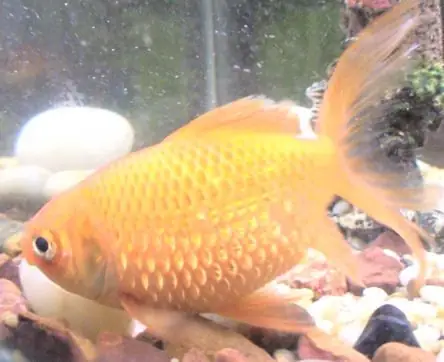
On a real fish: a goldfish with dropsy: swollen body, raised scales. Photo: Taipan198 at English Wikipedia, CC BY-SA 3.0, via Wikimedia Commons

Likely causes
- Overfeeding or constipation, one possible cause among several
- Swim bladder trouble (floating, sinking or swimming tilted)
- Bacterial infection or kidney disease, which can cause fluid build-up (dropsy)
- A female livebearer about to give birth
What to do today
- Stop feeding adult fish for a day or two (not fry), then feed small amounts. If the swelling has not gone down after the fast, or the scales start to lift, a fast is not enough: test the water and see a vet who treats fish (below) to find the cause.
- For goldfish, sink or soak dry food before feeding.
- Move a fish with pine-cone scales to a hospital tank and test the water in the main tank.
When to call a vet
A fish with dropsy, or a swelling that does not go down, needs a vet who treats fish: finding the cause takes tests, and the outlook for dropsy is often poor. A vet can also advise on humane euthanasia. A vet who treats fish can examine it and prescribe treatment; your local fish store or aquarium society can often recommend one.
Stop it happening again
Feed small amounts once or twice a day, test the water regularly and quarantine new fish. How to set up a quarantine tank.
Sources: Merck Veterinary Manual: Management of aquarium fish; Merck Veterinary Manual: Disorders and diseases of fish; UF/IFAS: Ammonia in Aquatic Systems.