
Fin rot
Ragged, frayed or shrinking fins.
Fin edges that look torn, frayed or melted, sometimes with a white or dark edge, and fins that get shorter over days. It is usually a bacterial infection that follows poor water or stress.
- Do this first
- Test the water now and change 30 to 50 percent if ammonia, nitrite or nitrate is up.
- Call a vet when
- See a vet who treats fish if the rot reaches the body, the fish stops eating, or red streaks appear.
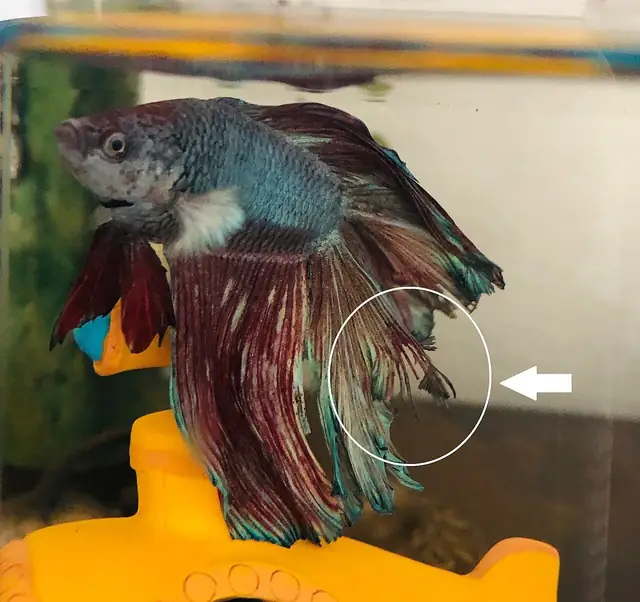
On a real fish: fin rot fraying a betta's tail. Photo: Dizzy Respect, CC BY-SA 4.0, via Wikimedia Commons

Likely causes
- Ammonia, nitrite or high nitrate
- Fin-nipping tankmates (tiger barbs, some tetras, puffers)
- Stress from a cold or crowded tank
What to do today
- Test the water now and change 30 to 50 percent if ammonia, nitrite or nitrate is up.
- Keep up small, frequent water changes; mild fin rot often heals in clean water alone.
- Watch for nipping: if a tankmate is the cause, separate them.
- If fins keep receding in clean water, ask a vet who treats fish before using medicine: choosing an antibiotic that works takes a diagnosis, often with a lab test.
When to call a vet
See a vet who treats fish if the rot reaches the body, the fish stops eating, or red streaks appear. A vet who treats fish can examine it and prescribe treatment; your local fish store or aquarium society can often recommend one.
Stop it happening again
Stable, clean water and tankmates that leave fins alone. How to set up a quarantine tank.
Sources: Merck Veterinary Manual: Management of aquarium fish; Merck Veterinary Manual: Disorders and diseases of fish; UF/IFAS: Ammonia in Aquatic Systems.