
Iridescent shark care
Pangasianodon hypophthalmus · Mekong and Chao Phraya rivers, Southeast Asia
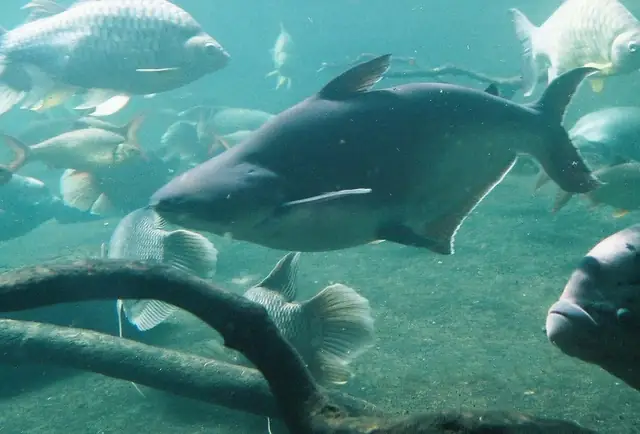
Iridescent sharks are not sharks but schooling catfish, farmed for food as swai, and they are sold at 2 inches though they grow to about 4 feet.
- Tank size
- 1,000 US gal or larger
- Temperature
- 72 to 79 °F (22 to 26 °C)
- Group size
- 5 or more
- Temperament
- Peaceful
- Adult size
- 51 in (adults reach about 4 ft; fish stunted in home tanks stay 6 to 12 in and often die young)
- pH
- 6.5 to 7.5
- Hardness (GH)
- 2 to 25 dGH
- Lifespan
- 15 to 20 years
- Diet
- Omnivore
- Care level
- Demanding
Even a 210 gallon is too small
72½ × 24½ × 29⅝ in outsideHow to keep iridescent sharks
Iridescent sharks are not sharks but schooling catfish, farmed for food as swai, and they are sold at 2 inches though they grow to about 4 feet. A school needs a pond-sized system of 1,000 gallons or more; in home aquariums they stay stunted and often die young.
Diet: Omnivore: large pellets, vegetables, fish and shrimp. Fish food types compared · how often to feed.
Where they swim: Middle of the tank.
Iridescent shark tank mates
Share the temperature and water, and neither side eats, nips or bullies the other. Check the full group in the stocking checker.
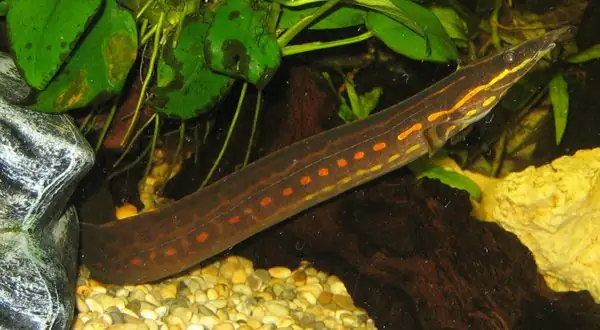
Fire eel
39 in · 180+ gal · 75–82 °F
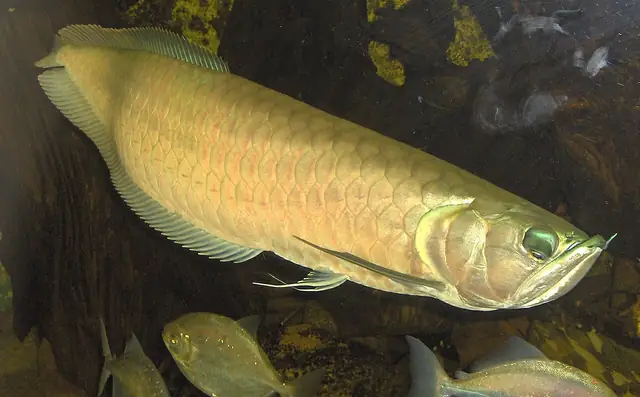
Silver arowana
36 in · 250+ gal · 75–82 °F
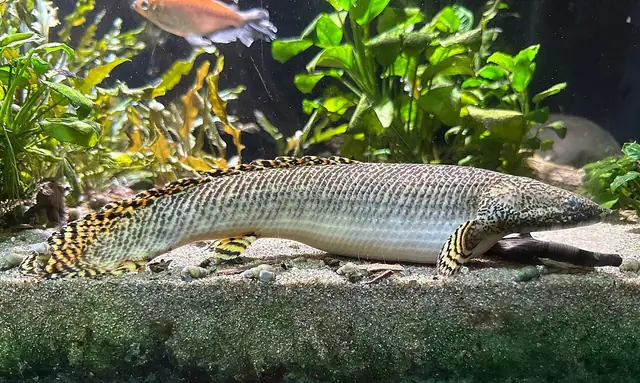
Ornate bichir
24 in · 180+ gal · 75–82 °F
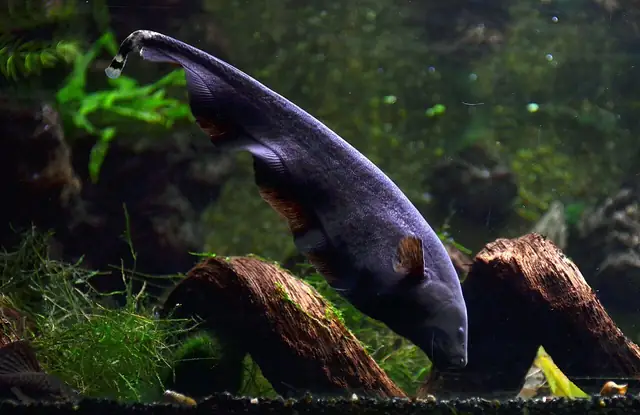
Black ghost knifefish
20 in · 125+ gal · 73–82 °F
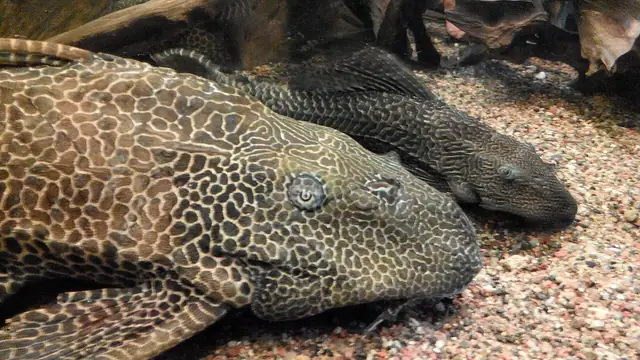
Sailfin pleco
20 in · 150+ gal · 72–82 °F
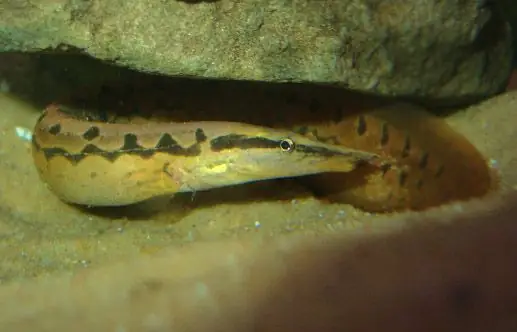
Zig-zag eel
20 in · 55+ gal · 72–82 °F
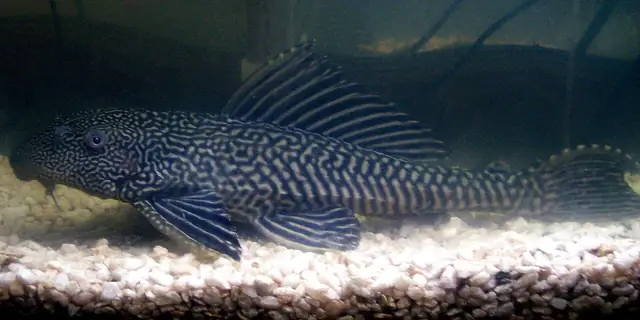
Common pleco
18 in · 125+ gal · 72–82 °F
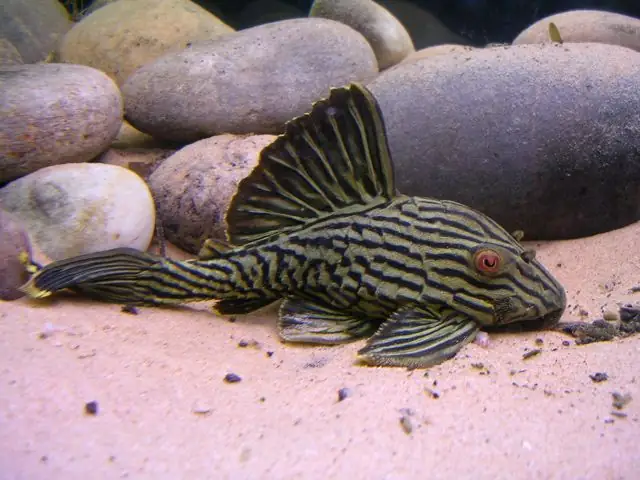
Royal pleco
17 in · 125+ gal · 72–82 °F
Keep apart
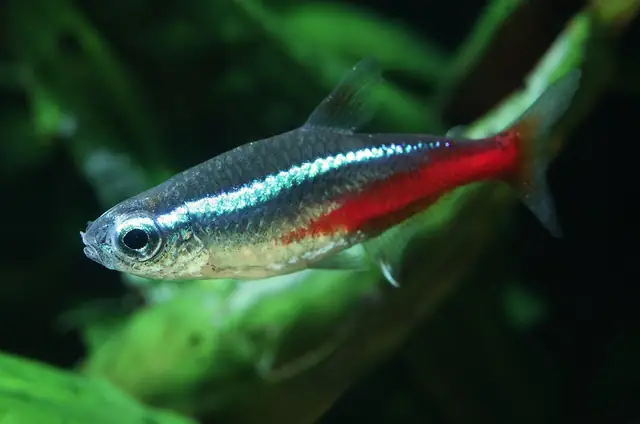 Neon tetra: Adult iridescent sharks eat fish under about 3 in; neon tetras grow to 1.6 in.
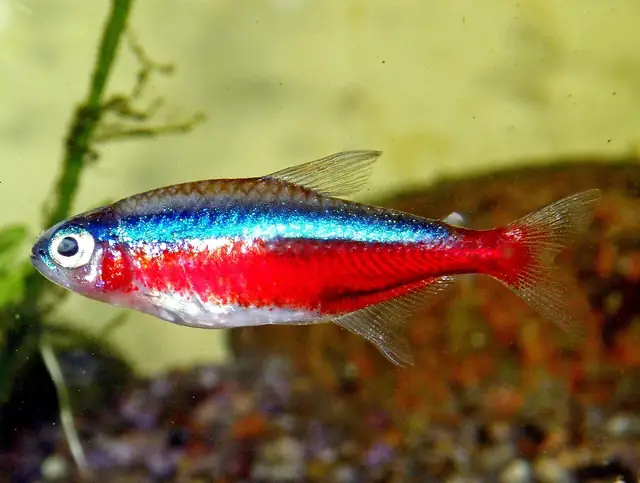 Cardinal tetra: Adult iridescent sharks eat fish under about 3 in; cardinal tetras grow to 1.2 in.
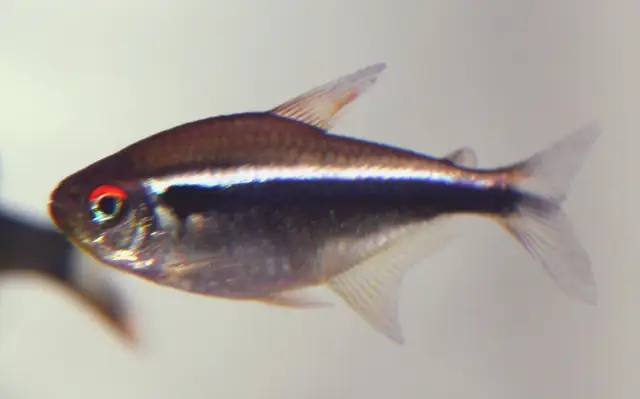 Black neon tetra: Adult iridescent sharks eat fish under about 3 in; black neon tetras grow to 1.5 in.
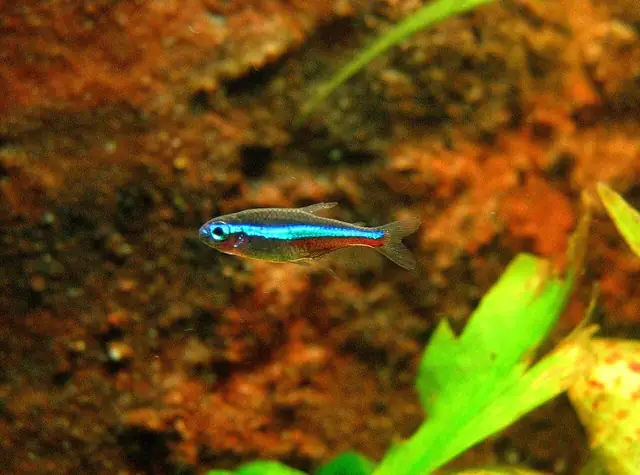 Green neon tetra: Adult iridescent sharks eat fish under about 3 in; green neon tetras grow to 1 in.
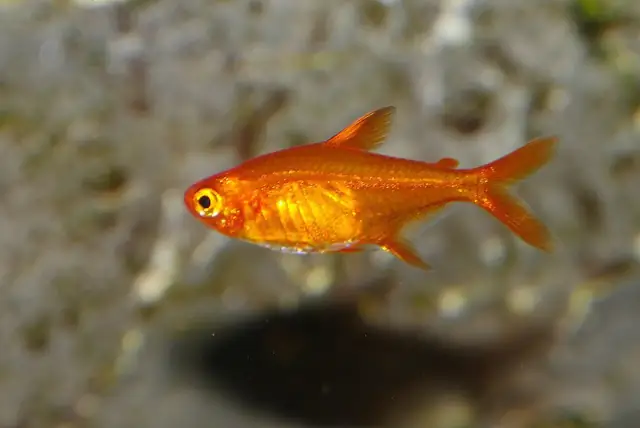 Ember tetra: Adult iridescent sharks eat fish under about 3 in; ember tetras grow to 1.2 in.
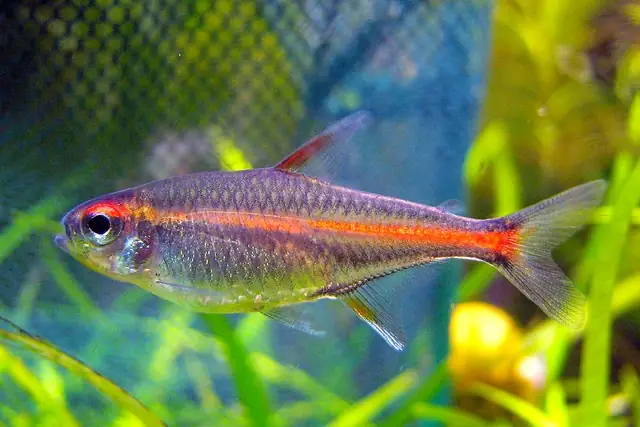 Glowlight tetra: Adult iridescent sharks eat fish under about 3 in; glowlight tetras grow to 1.5 in.
What an iridescent shark tank needs
A tank of 1,000 US gallons or more with a tight lid (they jump), and the equipment below.
As an Amazon Associate I earn from qualifying purchases.
API Freshwater Master Test Kit
Tests ammonia, nitrite, nitrate and pH, the readings that matter most before and after adding iridescent sharks.
Seachem Prime 100 mL
Removes chlorine and chloramine from tap water at every water change.
Fluval Edge Thermometer
Shows the water temperature at a glance, so you know it stays within 72 to 79 °F.
We don’t list fish food: any good brand of the foods under Diet will do. Plan the whole tank's equipment →
Common iridescent shark problems
- They panic and dash into the glass when startled, injuring themselves.
- Small tankmates are eaten as they grow.
Test the water first whenever fish look unwell: see what your readings mean, then match the symptom. For disease, a vet who treats fish can diagnose it and advise treatment.
More to compare
Sources
Name, origin and adult size checked against Wikipedia: Pangasianodon hypophthalmus. Temperature, pH, hardness, group size, lifespan and minimum tank size are common hobby guidance, not figures from that article. Ranges are the range the species tolerates; aim for the middle. Minimum tank sizes are for an adult group. Drawings are our own; photo credits follow.
Photo credits
Real photographs from Wikimedia Commons, resized and cropped to fit; each is used under the license named.
- Iridescent shark Melanochromis, CC BY-SA 3.0, via Wikimedia Commons
- Fire eel Llandor, CC BY-SA 3.0, via Wikimedia Commons
- Silver arowana Qwertzy2, CC BY-SA 3.0, via Wikimedia Commons
- Ornate bichir Bloopityboop, CC BY-SA 4.0, via Wikimedia Commons
- Black ghost knifefish Vassil, CC0, via Wikimedia Commons
- Sailfin pleco AnatolyPm, CC BY-SA 4.0, via Wikimedia Commons
- Zig-zag eel Adolsomee, CC BY-SA 3.0, via Wikimedia Commons
- Common pleco Richwales, Public domain, via Wikimedia Commons
- Royal pleco Neale Monks at en.wikipedia, CC BY-SA 3.0, via Wikimedia Commons
- Neon tetra Holger Krisp, CC BY 3.0, via Wikimedia Commons
- Cardinal tetra CHUCAO, CC BY-SA 3.0, via Wikimedia Commons
- Black neon tetra Debivort, CC BY-SA 3.0, via Wikimedia Commons
- Green neon tetra Sascha Biedermann, CC BY-SA 2.5, via Wikimedia Commons
- Ember tetra Klaus Rudloff, CC BY-SA 4.0, via Wikimedia Commons
- Glowlight tetra gonzalovalenzuela; cropped by Kyknos, CC BY 2.0, via Wikimedia Commons
- Rainbow shark MerlinSenger, CC BY-SA 3.0, via Wikimedia Commons
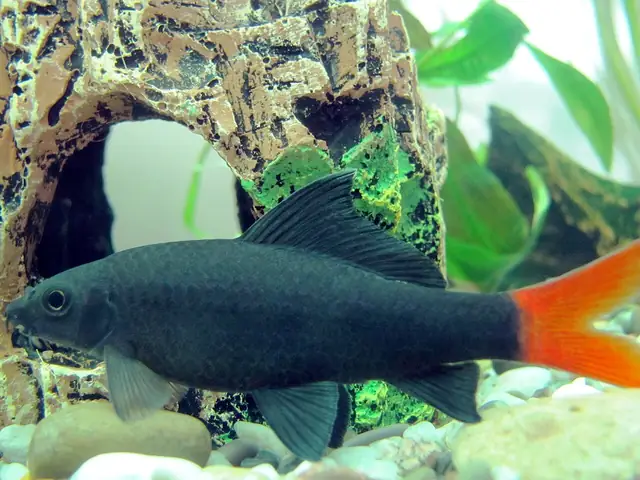
- Red-tail shark Astellar87, CC BY-SA 4.0, via Wikimedia Commons
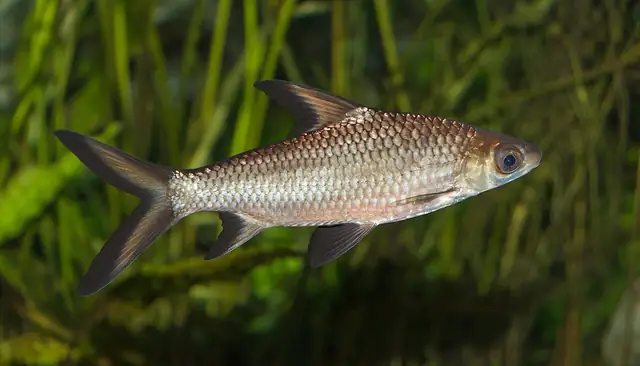
- Bala shark H. Zell, CC BY-SA 3.0, via Wikimedia Commons


