
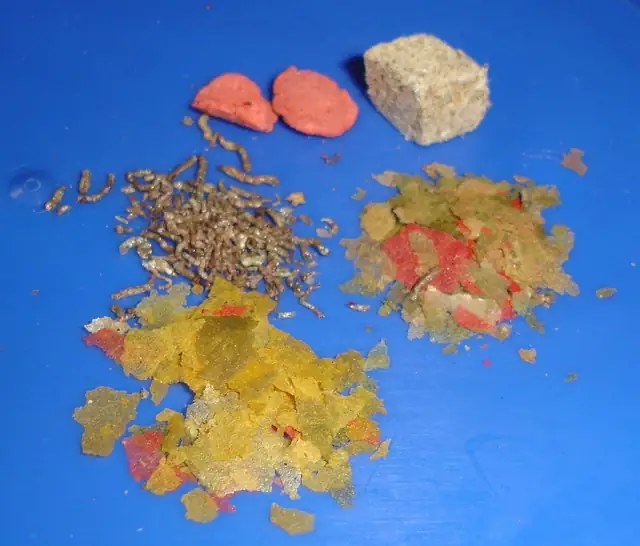

Staple foods
Flakes float, then sink slowly; they suit small and mid-water community fish. Micro pellets hold together longer and pollute less than crushed flakes. Sinking pellets and wafers reach corydoras, loaches and plecos, which rarely get flakes before the other fish eat them.
Choose a staple with whole fish, shrimp or insect meal near the top of the ingredients for most tropical fish, and one with spirulina or other plant matter for mollies, plecos and other grazers.
Frozen, live and freeze-dried foods
Frozen bloodworm, brine shrimp, daphnia and mysis are the easiest way to add variety; thaw a cube in a little tank water first. Live foods (brine shrimp nauplii, daphnia, microworms) bring out hunting behavior and tempt fussy fish such as pea puffers. Freeze-dried foods keep for months but swell in the gut; soak them before feeding.
Matching food to the fish
- Surface feeders (bettas, hatchetfish, killifish): floating pellets or flakes.
- Tiny fish (chili rasboras, ember tetras): powder-fine foods and baby brine shrimp.
- Bottom fish (corydoras, loaches): sinking pellets after lights out if faster fish steal them.
- Grazers (plecos, otocinclus, mollies): algae wafers and blanched vegetables such as zucchini or peas.
- Predators (pea puffers, some cichlids): frozen or live meaty foods; most refuse flakes.
Each species page lists its diet: browse the fish.
Keeping food fresh
Dry food loses vitamins once opened; buy a size you will use in a few months and keep it closed, cool and dry. Throw out food that smells stale or has clumped from damp.