Aquarium plant deficiencies: read the leaves

Where the damage shows first is the best clue. Yellow older leaves usually mean too little nitrogen; pale new leaves with green veins usually mean iron; pinholes and yellow edges on older leaves point to potassium. Start with a balanced all-in-one fertilizer, and root tabs for root-feeding plants, at the dose on the label, and check the light and CO₂ before chasing single nutrients.

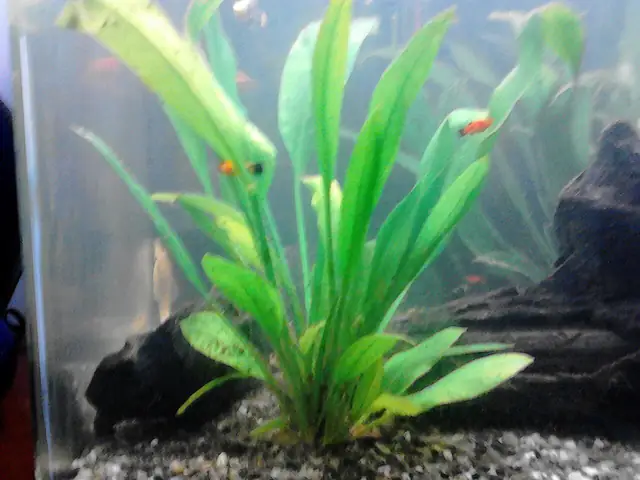
An Echinodorus sword plant in an aquarium
Shown: an Echinodorus sword plant in an aquarium. Photo: Brianza2008, CC BY-SA 3.0, via Wikimedia Commons

Which leaves, which sign

Old leaves turn evenly pale or yellow, new ones stay green. Usually nitrogen: plants move it from old leaves to new growth. Common in lightly stocked tanks with many plants.
New leaves pale yellow or white, veins still green. Usually iron: it cannot be moved from old leaves, so new growth shows it first.
Pinholes and yellow edges on older leaves. Usually potassium, often in tanks dosed only with root tabs or nitrogen.
Older leaves yellow between the veins, which stay green. Often magnesium; soft water from reverse osmosis or rain lacks it.

Check these first

  • Light and CO₂: plants that grow fast under strong light use nutrients up faster; slow, pale growth under weak light may be the light rather than a missing nutrient, so check the light first. CO₂ for planted tanks.
  • New plants: leaves that turn clear and dissolve in the first weeks are usually melt as the plant adjusts, not hunger. Plant melt.
  • Algae on the leaves looks like damage but is a light and nutrient balance problem. Identify algae.

What to change

Use an all-in-one liquid fertilizer for plants that feed from the water and root tabs for root feeders, at the dose on the label, for a few weeks before judging. New leaves show the result; damaged old leaves do not recover, so trim them. Add a single nutrient only when the signs match and the all-in-one has not helped. Fertilizer and root tabs.