
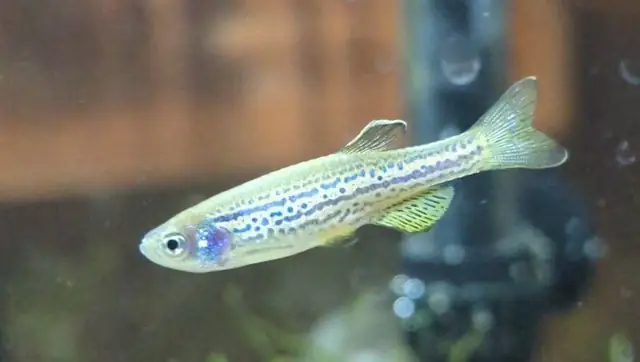

How egg scatterers spawn
The female lays her eggs in bursts among plants while one or more males fertilize them, often hundreds in a morning. Zebra danios spawn best in the morning and can lay 200 to 300 eggs in one session; tiger barbs lay several hundred sticky eggs that sink into clumps of plants. Once spawning is over, the adults eat any eggs they find, so the eggs need somewhere to hide.
The breeding tank
- A bare 5 to 10 gallon tank with a sponge filter and a heater, filled with water from the main tank.
- Cover the bottom with java moss, a spawning mop of acrylic yarn, or a layer of marbles or plastic mesh the eggs drop through out of reach. Plants, even plastic ones, encourage spawning.
- A lid: spawning fish jump.
Getting them to spawn
- Feed the adults generously for a week or two with live or frozen foods such as brine shrimp and bloodworm.
- Move a plump female and one or two males, or a small group, into the breeding tank in the evening.
- Morning light usually starts spawning. Check for eggs on the moss or under the marbles.
- Return the adults to the main tank as soon as they have spawned, the same morning.
Eggs and fry
Most eggs hatch within one to a few days, sooner in warmer water. Eggs that turn white and fuzzy were not fertilized; lift them out so the fungus does not spread. The fry hang on the glass and live off their yolk for a day or two, then need food small enough for a tiny mouth: infusoria or liquid fry food first, then microworms, vinegar eels and baby brine shrimp. Change a little water every day. Feeding fry · Microworms