

Which floating plant
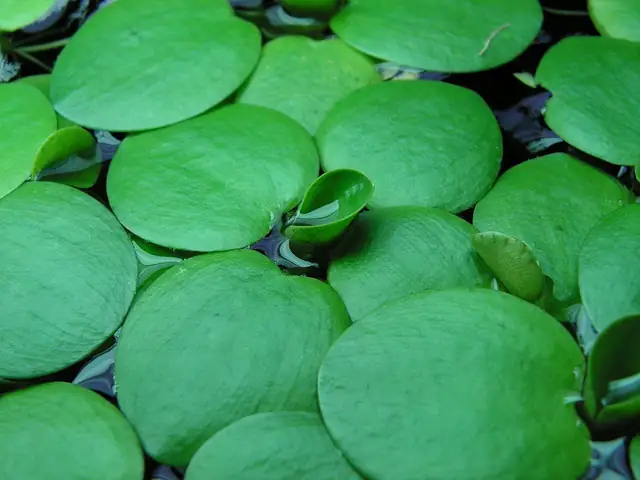
- Amazon frogbit: round, spongy leaves the size of a coin and long, fine roots that fry and shrimp hide in.
- Red root floater: small, heart-shaped leaves that trap air in a pocket each side of the midrib; the leaves and roots turn red in bright light.
- Salvinia (water spangles): small, oval leaves covered in fine white hairs that shed water. It has no true roots; a third, finely divided leaf hangs underneath and does the work.
- Water sprite: a fern that floats with lacy leaves or roots in the substrate as a stem plant.
- Hornwort: floats just under the surface instead of on it, so it shades less.
Think twice about duckweed
Duckweed has the smallest leaves of all, a few millimeters across, each with one root hanging down. It spreads by splitting, covers a surface in weeks and is almost impossible to remove once it is in: one leaf left behind starts it again, and it rides in on other plants and nets. Goldfish and some other fish eat it, which can be useful; in a planted tank most keepers would rather not have it.
How much of the surface to cover
Floating plants shade everything below them. Leave a third to half of the surface open, more over carpets and stem plants that need light. Bettas and gouramis breathe air at the surface and need open water to reach it. A ring of airline tubing, or a strip of it across a corner, keeps floaters in one place and away from the filter outflow.
Keeping them healthy
Most floaters want a calm surface, a light fairly close above them and dry tops to their leaves. Leaves that sit wet from splashing or from drips off the lid rot. Thin them every week or two: each handful you take out takes its share of nitrate and phosphate with it. Roots that reach the substrate can be trimmed with scissors.
Never release them
Floating plants that escape can take over lakes and canals. Giant salvinia has choked lakes in Africa and Caddo Lake in Texas, water lettuce and water hyacinth are invasive in warm waterways around the world, and Amazon frogbit has escaped into rivers and canals in California. Put extras in the trash, not in a drain, pond or stream.