
Butterfly goodeid care
Ameca splendens · Ameca River basin, Jalisco, Mexico
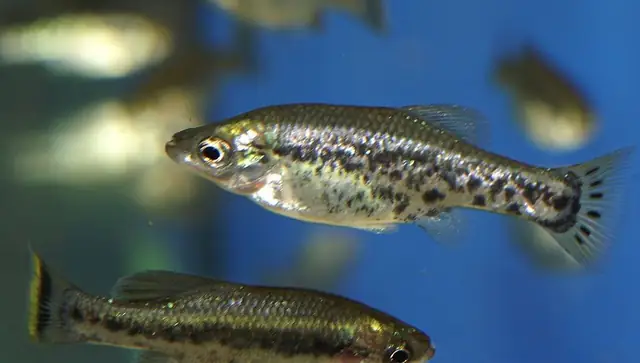
The butterfly goodeid is a livebearer from the Ameca River in western Mexico: males have black-washed back and tail fins with a yellow band along the tail’s edge, and females are spotted.
- Tank size
- 30 US gal or larger
- Temperature
- 70 to 75 °F (21 to 24 °C)
- Group size
- 6 or more
- Temperament
- Semi-aggressive
- Adult size
- 4 in (females; males about 3 in)
- pH
- 7 to 8
- Hardness (GH)
- 5 to 10 dGH
- Lifespan
- 3 to 5 years
- Diet
- Omnivore
- Care level
- Easy
In a 30 gallon
36¼ × 12⅝ × 16¾ in outsideHow to keep butterfly goodeids
The butterfly goodeid is a livebearer from the Ameca River in western Mexico: males have black-washed back and tail fins with a yellow band along the tail’s edge, and females are spotted. It is critically endangered in the wild, and zoos and hobbyists keep it going. Keep six or more, males and females, in a 30 gallon or larger tank of clean, hard water at 70 to 75 °F under strong light, so it can graze the algae that grows. In warm months it can live in an outdoor tub, since it takes nights down to 60 °F, as long as birds and cats can’t reach it.
Diet: Omnivore: algae and vegetable foods, flakes, small live foods. Fish food types compared · how often to feed.
Where they swim: Middle of the tank.
Butterfly goodeid tank mates
Share the temperature and water, and neither side eats, nips or bullies the other. Check the full group in the stocking checker.
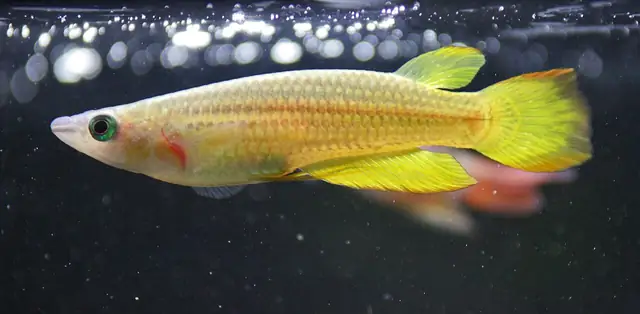
Golden wonder killifish
4 in · 20+ gal · 72–79 °F
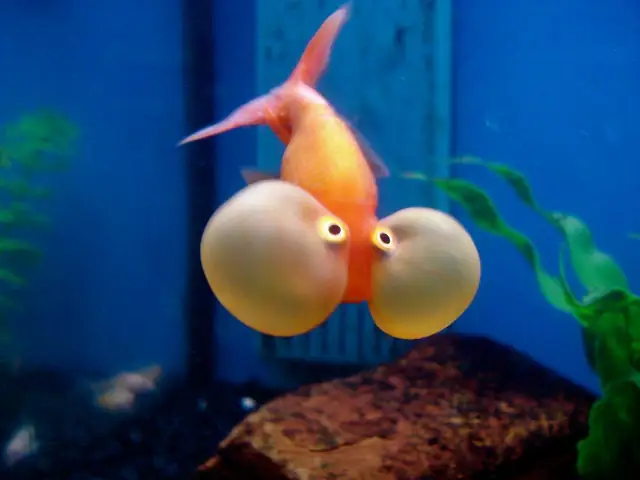
Bubble eye goldfish
4 in · 30+ gal · 65–74 °F
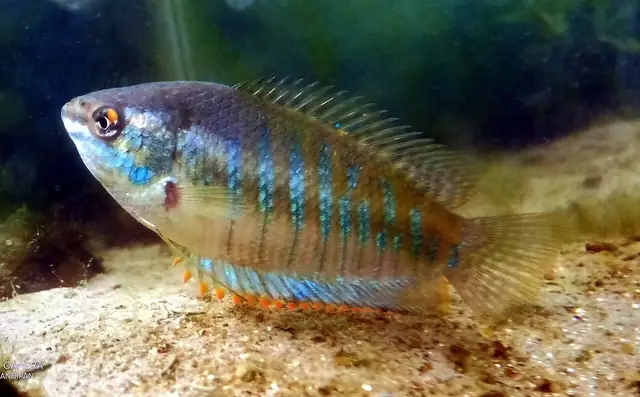
Banded gourami
4 in · 30+ gal · 72–82 °F
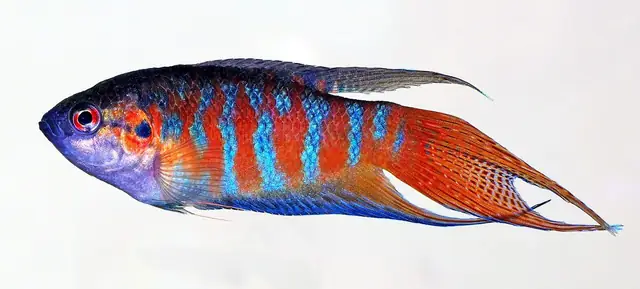
Paradise fish
3.5 in · 20+ gal · 61–79 °F
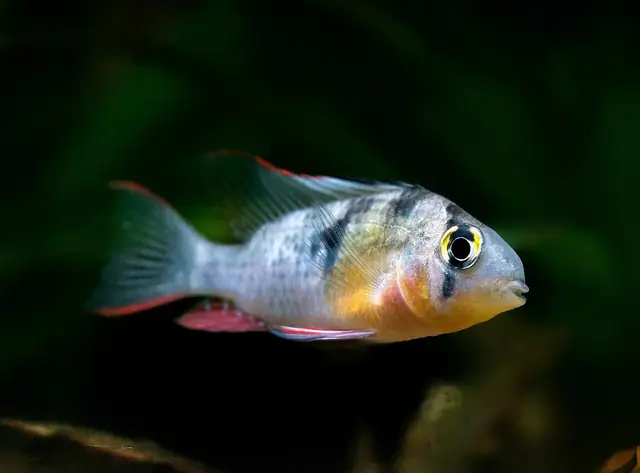
Bolivian ram
3.2 in · 29+ gal · 72–80 °F
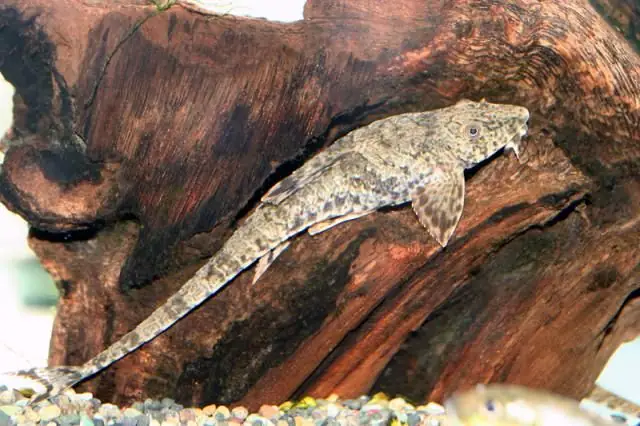
Red lizard whiptail catfish
5 in · 20+ gal · 72–79 °F
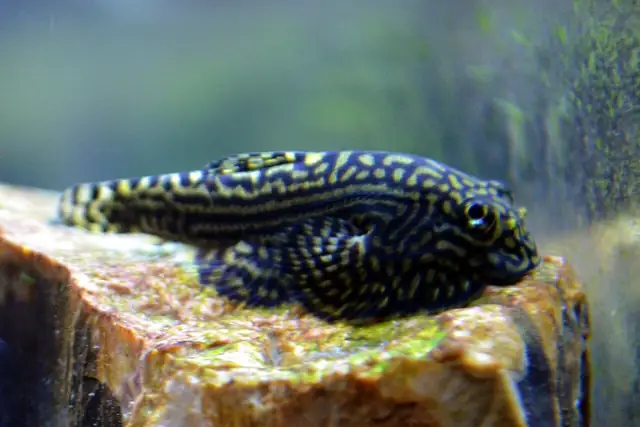
Reticulated hillstream loach
3 in · 20+ gal · 68–75 °F
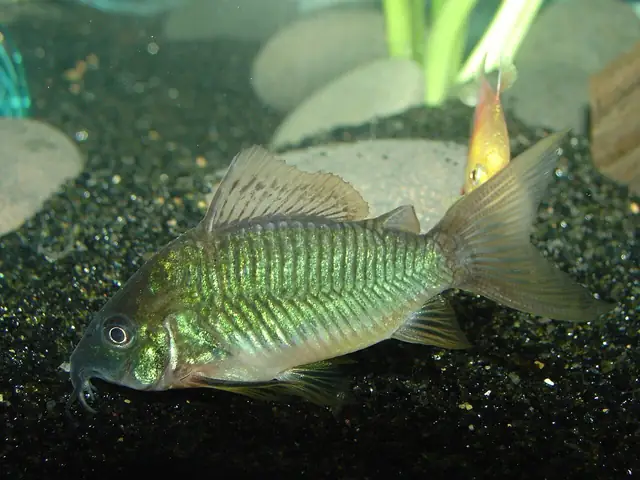
Emerald corydoras
3 in · 29+ gal · 72–82 °F
Keep apart
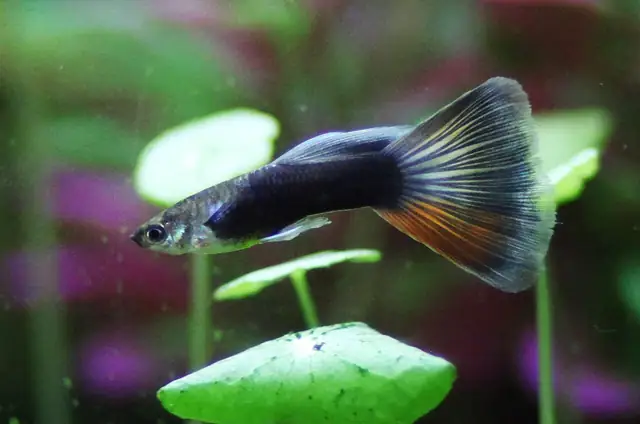 Guppy: Butterfly goodeids nip long fins like those of guppies.
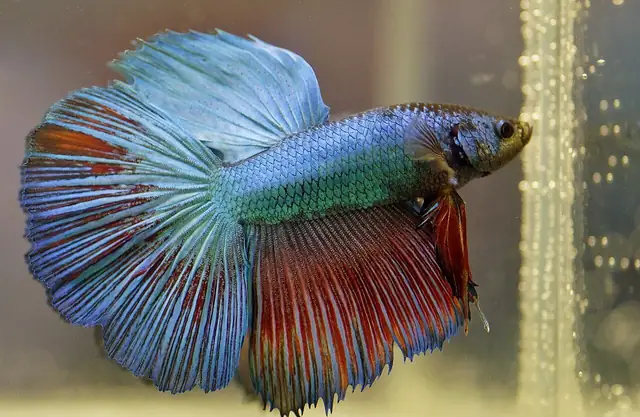 Betta: Butterfly goodeids nip long fins like those of bettas.
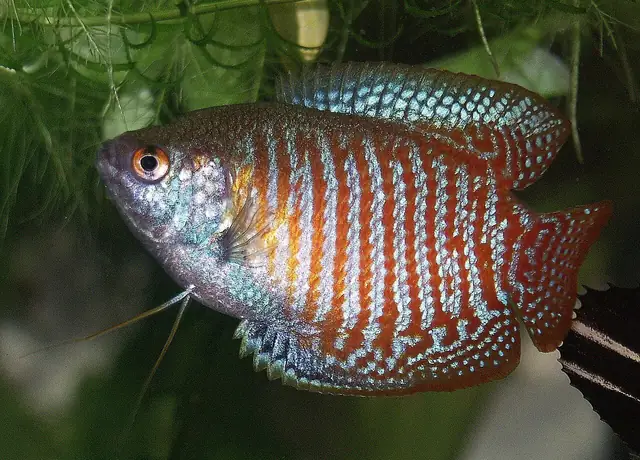 Dwarf gourami: No shared temperature: butterfly goodeids need 70 to 75 °F, dwarf gouramis 77 to 82 °F.
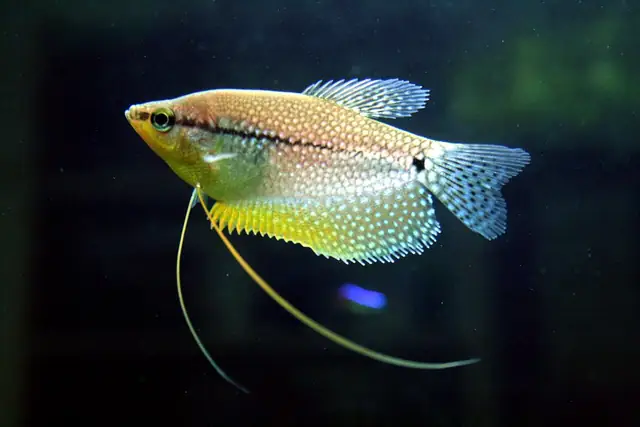 Pearl gourami: No shared temperature: butterfly goodeids need 70 to 75 °F, pearl gouramis 77 to 82 °F.
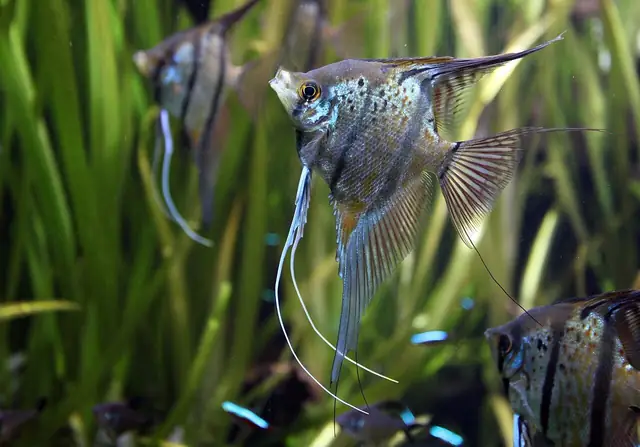 Angelfish: Butterfly goodeids nip long fins like those of angelfish.
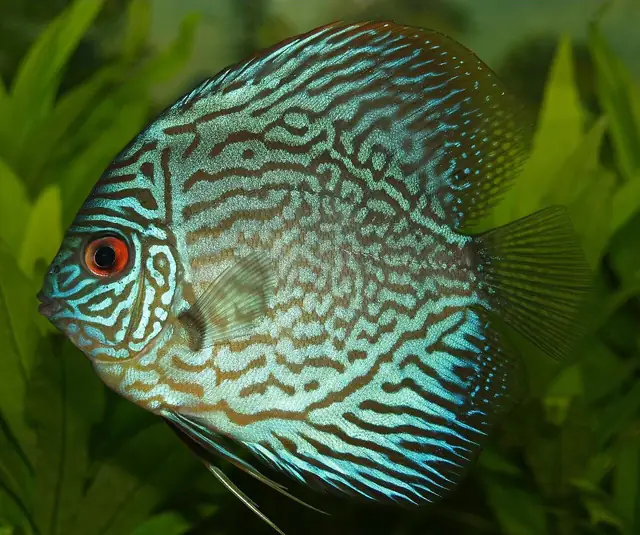 Discus: No shared temperature: butterfly goodeids need 70 to 75 °F, discus 82 to 88 °F.
What a butterfly goodeid tank needs
A tank of 30 US gallons or more (such as the 30 gallon) with a cover, and the equipment below.
As an Amazon Associate I earn from qualifying purchases.
Aqueon PRO QuietFlow Power Filter 20
Rated by the maker for up to 30 US gal, which covers a 30 gallon butterfly goodeid tank without being built for a far bigger one.
Aqueon QuietFlow Internal Power Filter 15–30 gal
Rated by the maker for 15–30 US gal, which covers a 30 gallon butterfly goodeid tank without being built for a far bigger one.
Fluval E100
Butterfly goodeids need 70 to 75 °F; most homes run cooler, so a heater holds the temperature.
API Freshwater Master Test Kit
Tests ammonia, nitrite, nitrate and pH, the readings that matter most before and after adding butterfly goodeids.
Seachem Prime 100 mL
Removes chlorine and chloramine from tap water at every water change.
Fluval Edge Thermometer
Shows the water temperature at a glance, so you know it stays within 70 to 75 °F.
We don’t list fish food: any good brand of the foods under Diet will do. Plan the whole tank's equipment →
Common butterfly goodeid problems
- It nips and bullies small, delicate fish such as guppies and small tetras; choose sturdy tankmates that like hard water.
- It needs plant food to thrive: if the algae runs short, add lettuce, spinach or peas.
- Soft, acidic water doesn’t suit it.
Test the water first whenever fish look unwell: see what your readings mean, then match the symptom. For disease, a vet who treats fish can diagnose it and advise treatment.
More to compare
Sources
Name, origin, adult size and temperature checked against Wikipedia: Ameca splendens. pH, hardness, group size, lifespan and minimum tank size are common hobby guidance, not figures from that article. Ranges are the range the species tolerates; aim for the middle. Minimum tank sizes are for an adult group. Drawings are our own; photo credits follow.
Photo credits
Real photographs from Wikimedia Commons, resized and cropped to fit; each is used under the license named.
- Butterfly goodeid Przemysław Malkowski, CC BY-SA 3.0, via Wikimedia Commons
- Golden wonder killifish Marrabbio2, CC BY-SA 3.0, via Wikimedia Commons
- Bubble eye goldfish Angie Torres from Toronto, CC BY-SA 2.0, via Wikimedia Commons
- Banded gourami Sandipan Das, CC BY 4.0, via Wikimedia Commons
- Paradise fish André Karwath; edited by Muhammad, CC BY-SA 2.5, via Wikimedia Commons
- Bolivian ram HenryC88, CC BY-SA 4.0, via Wikimedia Commons
- Red lizard whiptail catfish Ckf6412, CC BY-SA 4.0, via Wikimedia Commons
- Reticulated hillstream loach Spiketooth, CC BY-SA 3.0, via Wikimedia Commons
- Emerald corydoras NonstickRon, CC BY-SA 2.0, via Wikimedia Commons
- Guppy Marrabbio2, CC BY-SA 3.0, via Wikimedia Commons
- Betta ivabalk (Pixabay), CC0, via Wikimedia Commons
- Dwarf gourami Quatermass (English Wikipedia), Public domain, via Wikimedia Commons
- Pearl gourami h080, CC BY-SA 2.0, via Wikimedia Commons
- Angelfish Citron, CC BY-SA 3.0, via Wikimedia Commons
- Discus Patrick Farrelly, Public domain, via Wikimedia Commons
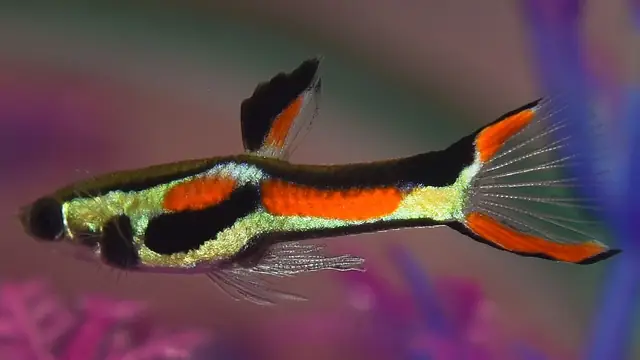
- Endler's livebearer Dgrummon, CC BY-SA 4.0, via Wikimedia Commons
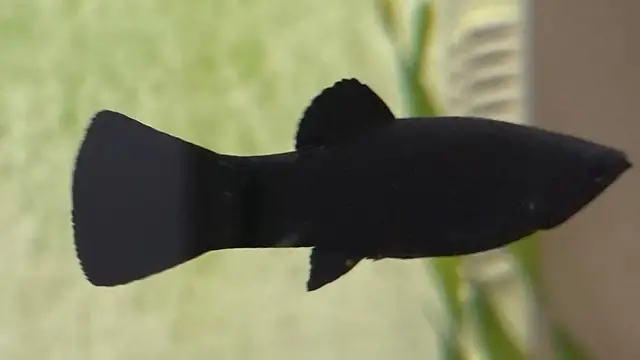
- Molly LPA74, CC BY-SA 4.0, via Wikimedia Commons
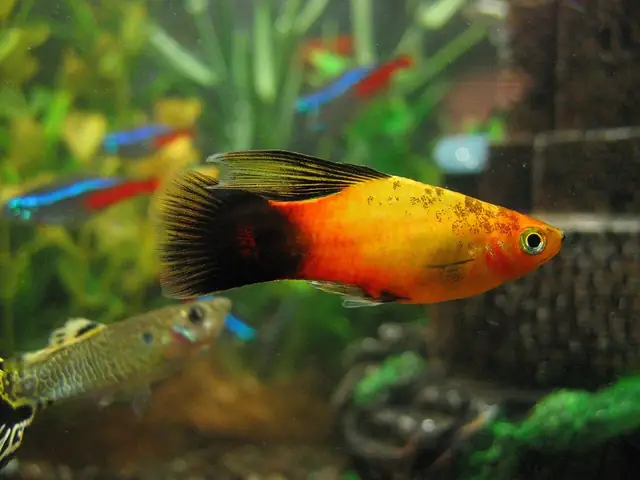
- Platy Monika Korzeniec, CC BY-SA 3.0, via Wikimedia Commons


