
Five-banded barb care
Desmopuntius pentazona · Blackwater streams and peat swamps of northwestern Borneo
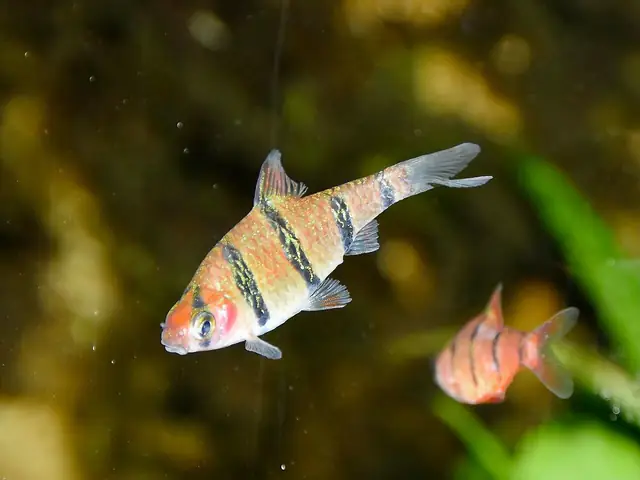
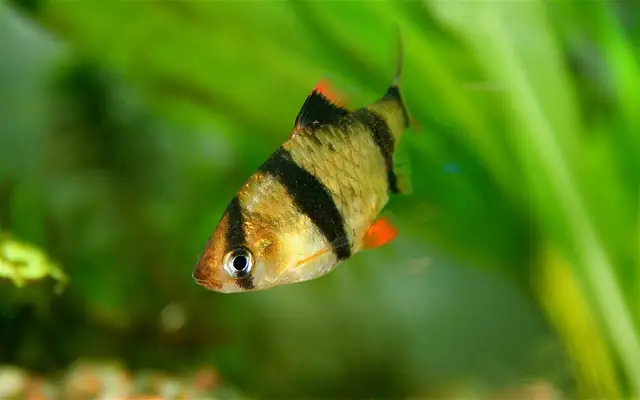
Five-banded barbs are peaceful, golden barbs with five dark bands; unlike tiger barbs, they leave fins alone.
- Tank size
- 29 US gal or larger
- Temperature
- 74 to 84 °F (23 to 29 °C)
- Group size
- 5 or more
- Temperament
- Peaceful
- Adult size
- 3.5 in
- pH
- 5 to 7
- Hardness (GH)
- 5 to 12 dGH
- Lifespan
- 5 to 6 years
- Diet
- Omnivore
- Care level
- Moderate
In a 29 gallon
30¼ × 12½ × 18¾ in outsideHow to keep five-banded barbs
Five-banded barbs are peaceful, golden barbs with five dark bands; unlike tiger barbs, they leave fins alone. Keep five or more in a planted 29 gallon or larger tank with soft, acid water at 74 to 84 °F; tannins from wood and leaves suit them.
Diet: Omnivore: flakes, small pellets, frozen and live foods. Fish food types compared · how often to feed.
Where they swim: Middle of the tank.
Five-banded barb tank mates
Share the temperature and water, and neither side eats, nips or bullies the other. Check the full group in the stocking checker.
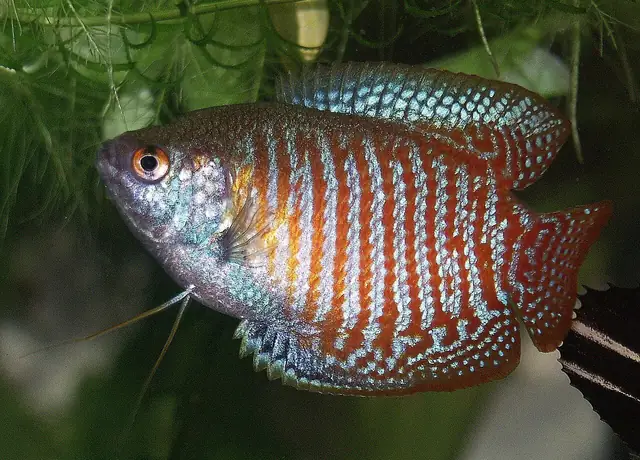
Dwarf gourami
3.5 in · 10+ gal · 77–82 °F
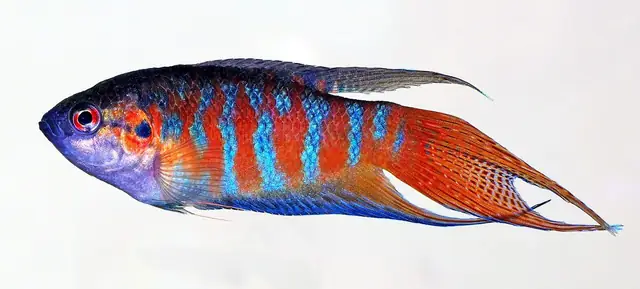
Paradise fish
3.5 in · 20+ gal · 61–79 °F
DrawingClown pleco
3.5 in · 20+ gal · 73–82 °F
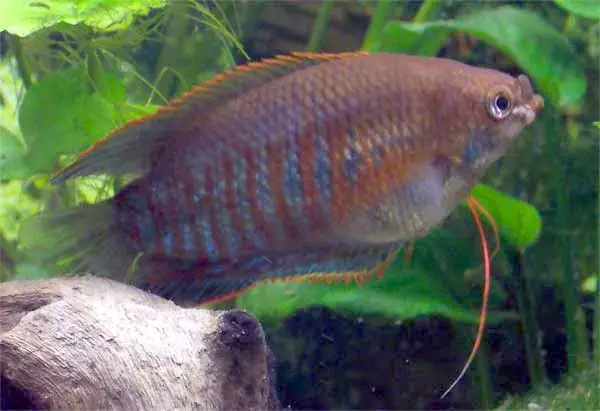
Thick-lipped gourami
3.5 in · 20+ gal · 72–82 °F
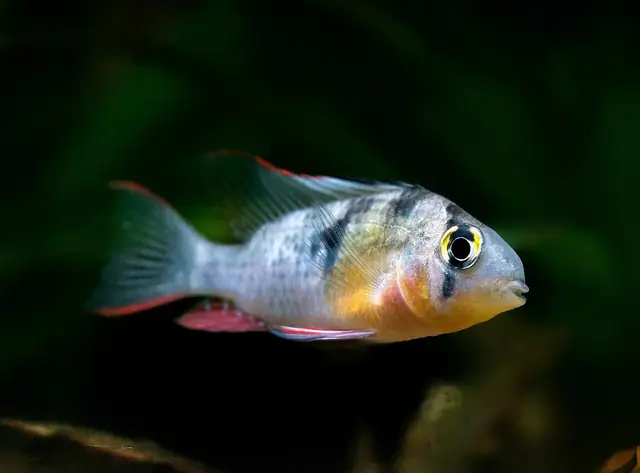
Bolivian ram
3.2 in · 29+ gal · 72–80 °F
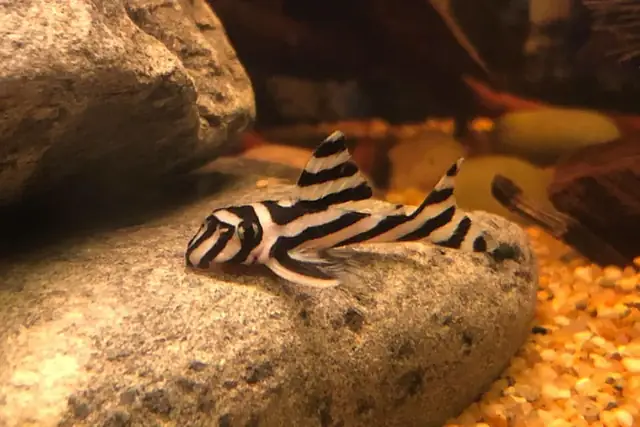
Zebra pleco
3.2 in · 20+ gal · 79–86 °F
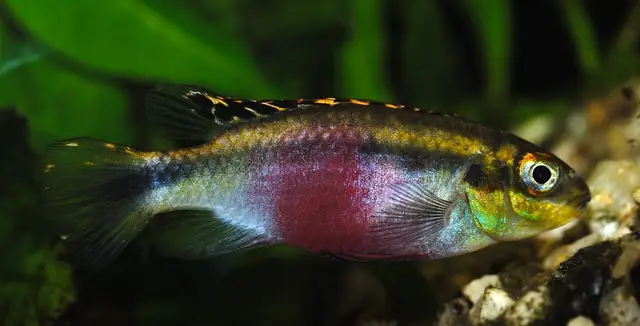
Kribensis
4 in · 29+ gal · 75–80 °F
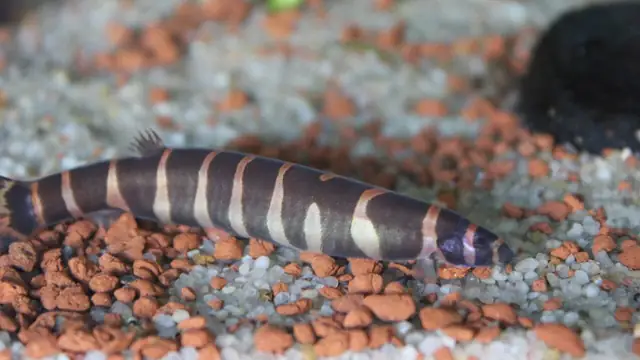
Kuhli loach
4 in · 20+ gal · 75–82 °F
Keep apart
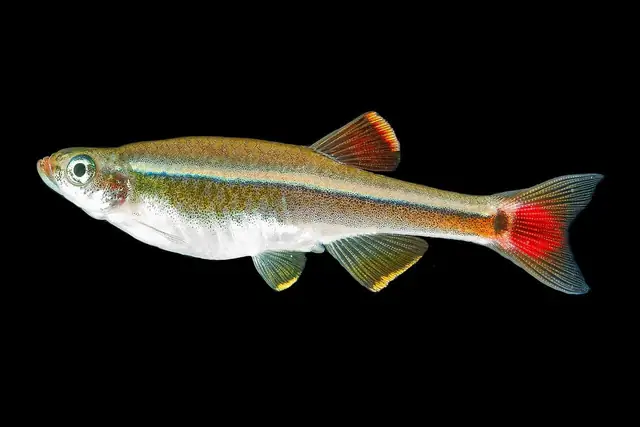 White cloud mountain minnow: No shared temperature: five-banded barbs need 74 to 84 °F, white cloud mountain minnows 64 to 72 °F.
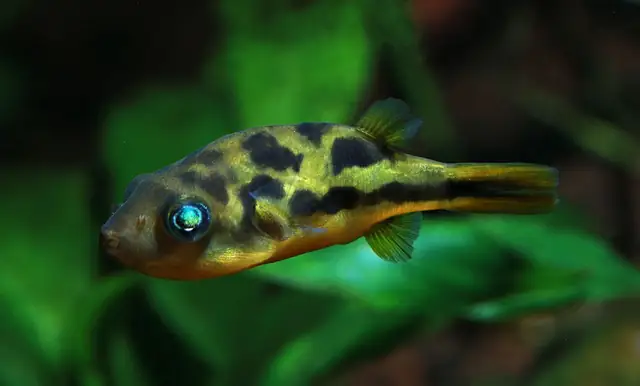 Pea puffer: Pea puffers belong in a tank of their own.
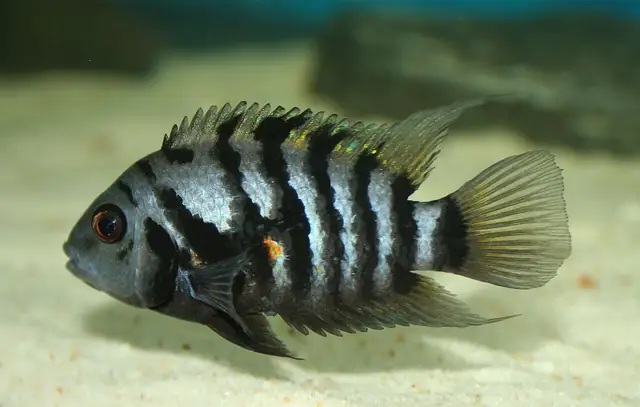 Convict cichlid: Convict cichlids are aggressive towards peaceful fish such as five-banded barbs.
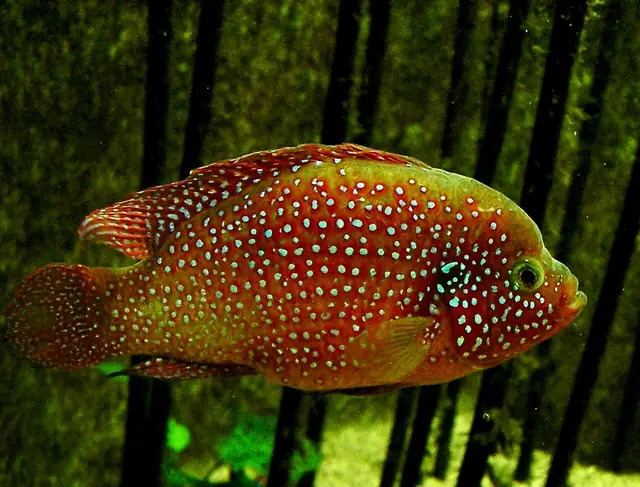 Jewel cichlid: Jewel cichlids are aggressive towards peaceful fish such as five-banded barbs.
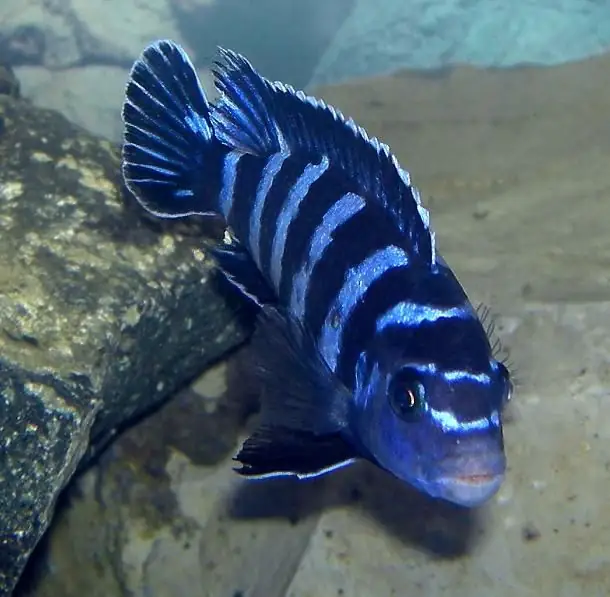 Demasoni cichlid: Demasoni cichlids are aggressive towards peaceful fish such as five-banded barbs.
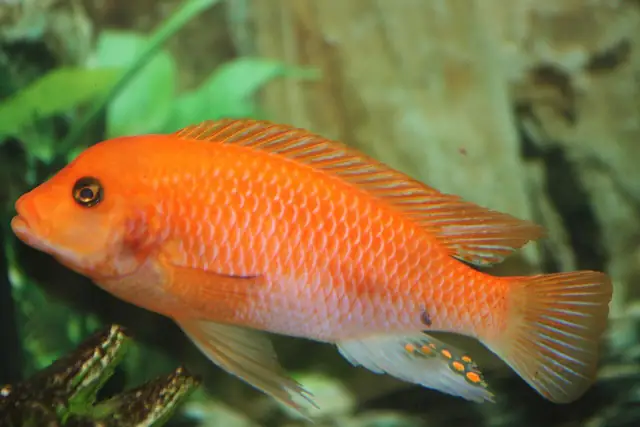 Red zebra cichlid: Red zebra cichlids are aggressive towards peaceful fish such as five-banded barbs.
What a five-banded barb tank needs
A tank of 29 US gallons or more (such as the 29 gallon) with a cover, and the equipment below.
As an Amazon Associate I earn from qualifying purchases.
Aqueon PRO QuietFlow Power Filter 20
Rated by the maker for up to 30 US gal, which covers a 29 gallon five-banded barb tank without being built for a far bigger one.
Aqueon QuietFlow Internal Power Filter 15–30 gal
Rated by the maker for 15–30 US gal, which covers a 29 gallon five-banded barb tank without being built for a far bigger one.
Cobalt Aquatics Neo-Therm Pro 100W
Five-banded barbs need 74 to 84 °F; most homes run cooler, so a heater holds the temperature.
API Freshwater Master Test Kit
Tests ammonia, nitrite, nitrate and pH, the readings that matter most before and after adding five-banded barbs.
Seachem Prime 100 mL
Removes chlorine and chloramine from tap water at every water change.
Fluval Edge Thermometer
Shows the water temperature at a glance, so you know it stays within 74 to 84 °F.
More choices, each with the reason it is in or out: Filters for a 29 gallon tank · Heaters for a 29 gallon tank. We don’t list fish food: any good brand of the foods under Diet will do. Plan the whole tank's equipment →
Common five-banded barb problems
- Hard, alkaline water and high nitrate wear them down; soft water and regular changes keep them colorful.
- Fish sold under this name are often the six-banded barb, a close relative with the same care.
Test the water first whenever fish look unwell: see what your readings mean, then match the symptom. For disease, a vet who treats fish can diagnose it and advise treatment.
More to compare
Sources
Name, origin and adult size checked against Wikipedia: Desmopuntius pentazona. Temperature, pH, hardness, group size, lifespan and minimum tank size are common hobby guidance, not figures from that article. Ranges are the range the species tolerates; aim for the middle. Minimum tank sizes are for an adult group. Drawings are our own; photo credits follow.
Photo credits
Real photographs from Wikimedia Commons, resized and cropped to fit; each is used under the license named.
- Five-banded barb NasserHalaweh, CC BY-SA 4.0, via Wikimedia Commons
- Dwarf gourami Quatermass (English Wikipedia), Public domain, via Wikimedia Commons
- Paradise fish André Karwath; edited by Muhammad, CC BY-SA 2.5, via Wikimedia Commons
- Thick-lipped gourami Oliver Gorski, CC BY-SA 3.0, via Wikimedia Commons
- Bolivian ram HenryC88, CC BY-SA 4.0, via Wikimedia Commons
- Zebra pleco Peaceinpianos, CC BY-SA 4.0, via Wikimedia Commons
- Kribensis André Karwath aka Aka, CC BY-SA 2.5, via Wikimedia Commons
- Kuhli loach Iidkk, CC BY-SA 4.0, via Wikimedia Commons
- White cloud mountain minnow Petrtyl, CC BY 4.0, via Wikimedia Commons
- Pea puffer Beta Mahatvaraj, CC BY-SA 4.0, via Wikimedia Commons
- Convict cichlid S. Olkowicz, CC BY 2.5, via Wikimedia Commons
- Jewel cichlid NasserHalaweh, CC BY-SA 4.0, via Wikimedia Commons
- Demasoni cichlid lee Nachtigal, CC BY 2.0, via Wikimedia Commons
- Red zebra cichlid Maha Dinesh, CC BY-SA 3.0, via Wikimedia Commons
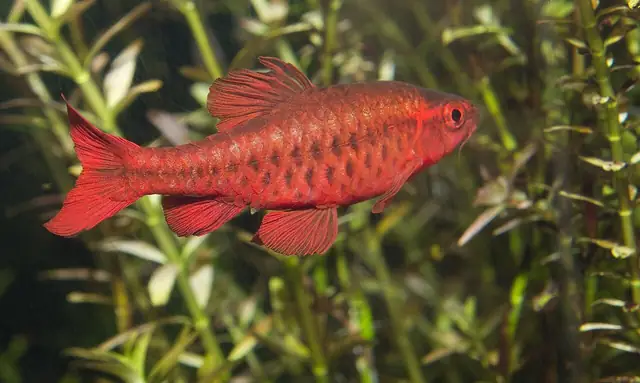
- Cherry barb Brian Gratwicke, CC BY 2.0, via Wikimedia Commons
- Tiger barb Faucon, CC BY-SA 2.5, via Wikimedia Commons
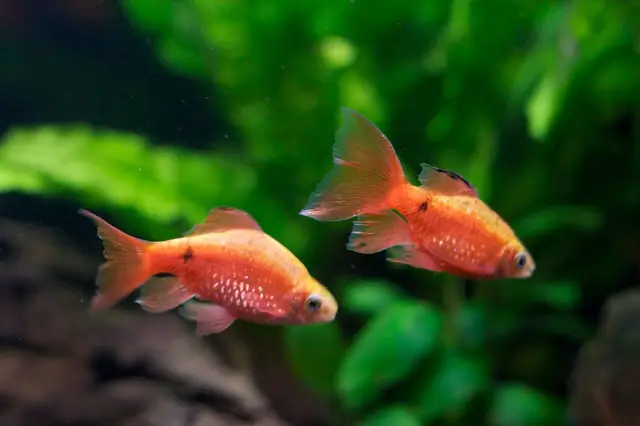
- Rosy barb Kkonstan, CC BY 3.0, via Wikimedia Commons
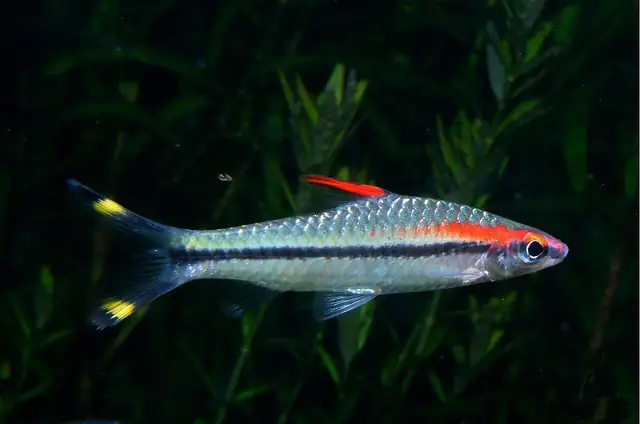
- Denison barb Anandarajkumar, CC BY-SA 3.0, via Wikimedia Commons


