

What is in the cup
The plants are clones grown under sterile conditions on a nutrient gel, a method called micropropagation. Because nothing else can live in the cup, they carry no snail eggs, planaria, hydra or algae, and no pesticide from a nursery. That makes them the safe choice for a shrimp tank or a tank you want to keep free of pest snails.
Get all the gel off
Squeeze the plants out of the cup and rinse them in a bowl of tap water, working the gel out of the roots with your fingers. The gel is sugar and nutrients: left in the tank it feeds bacteria and clouds the water. Plant the same day if you can, or keep them in a little water under a light for a day or two.
Split and plant
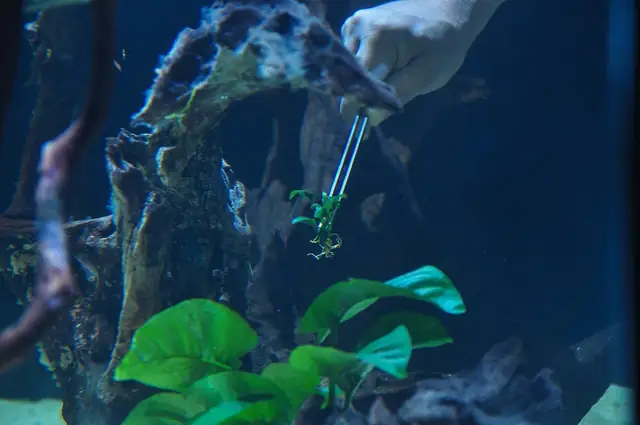
Pull the clump into pieces the size of a fingertip. Plant carpeting plants in small plugs about an inch apart, and rosette plants such as swords and crypts singly. Tie or glue bucephalandra and anubias to rock or wood. Tweezers make it much easier. How to plant each kind of plant · The dry start method
Why some leaves melt
Cup plants grow in humid air, not under water, so some leaves melt as the plant grows its underwater leaves. They melt less than potted plants grown above water. Remove dissolving leaves and leave the roots alone. Plant melt
Potted plants are different
Potted plants come in a basket of rock wool and can carry snails, snail eggs and other hitchhikers. Remove the basket and every bit of rock wool, rinse the roots and look the leaves over for jelly-like egg clusters before planting. Pest snails · Planaria · Hydra