
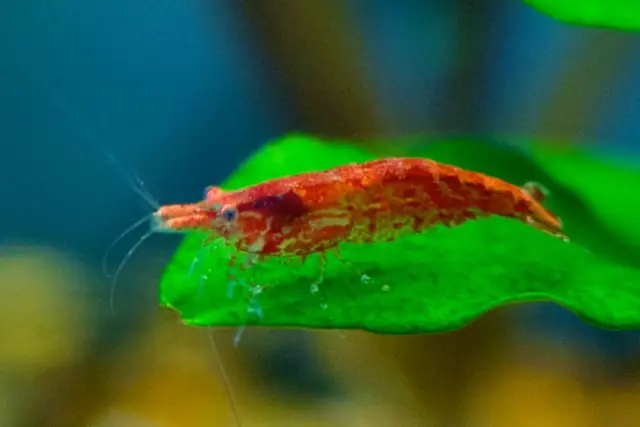

What they eat in the tank
Cherry shrimp are omnivores that pick at biofilm, algae and detritus with the small claws on their front legs, and they eat their own molted shells too. They do not eat healthy plants, which is why they are kept in planted tanks. A tank that has run for a few months, with plants, moss and some wood or leaf litter, grows enough of this film to feed a small colony. Cherry shrimp care
Amano shrimp eat the same and more algae; filter feeders such as bamboo and vampire shrimp catch fine particles from the current instead and need a tank with plenty of flow and fine food in the water.
What to add
- Sinking shrimp or algae food: a pellet or a pinch of crumbs is a meal for ten or twenty shrimp.
- Blanched vegetables: a thin slice of zucchini, cucumber or spinach, boiled for a minute so it sinks and softens. Take out what is left after a few hours.
- Dried leaves: an Indian almond or oak leaf grows the film shrimp graze and is eaten slowly over weeks.
- Fish food: the flakes and pellets the fish leave are eaten too, so a community tank with shrimp often needs nothing extra.
How much and how often
Feed two or three times a week in a planted tank, a little more often in a bare tank or a large colony. The test is time: a meal should be gone in two or three hours. Food left overnight rots, feeds planaria and detritus worms, and can push ammonia up in a small tank. Shrimp that swarm the food in seconds are hungry; shrimp that ignore it are full.
Shrimplets eat the same film as the adults from the day they are born, so a tank with moss gives them food without any special fry food. Breeding cherry shrimp
What to keep out
Copper harms shrimp. Most foods and plant fertilizers carry only a trace of it, but medicines and some snail treatments carry much more, so read the label of anything that goes into a shrimp tank. Overfeeding causes more shrimp losses than any food: when in doubt, skip a day. Fertilizer doses for a shrimp tank