
Flying fox care
Epalzeorhynchos kalopterus · Fast foothill rivers of the Thai-Malay Peninsula, Borneo, Java and Sumatra
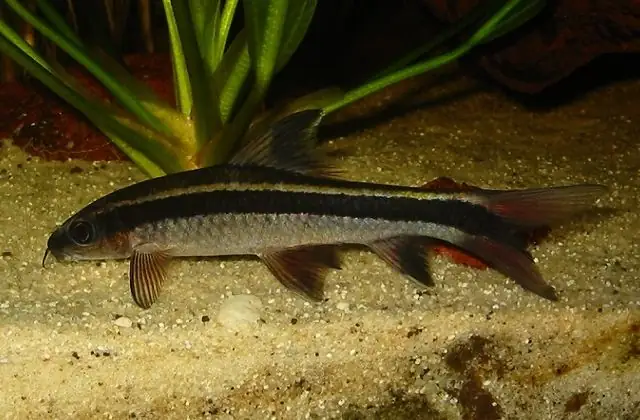
The flying fox is a slim bottom-dweller with a black stripe from mouth to tail and a gold line above it.
- Tank size
- 40 US gal or larger
- Temperature
- 72 to 79 °F (22 to 26 °C)
- Group size
- Alone (one per tank)
- Temperament
- Semi-aggressive
- Adult size
- 6 in (the largest fish; most stay near 4.7 in)
- pH
- 6 to 7.5
- Hardness (GH)
- 4 to 15 dGH
- Lifespan
- 8 to 10 years
- Diet
- Omnivore
- Care level
- Easy
In a 40 gallon breeder
36 3/16 × 18¼ × 16 15/16 in outsideHow to keep flying foxes
The flying fox is a slim bottom-dweller with a black stripe from mouth to tail and a gold line above it. It eats green algae and grows to about 5 or 6 inches, so it needs a 40 gallon or larger tank with a lid, plants, rocks and wood. Adults defend their patch from their own kind and lookalikes, so keep one.
Diet: Omnivore: algae, algae wafers, flakes, pellets, frozen foods. Fish food types compared · how often to feed.
Where they swim: Bottom of the tank.
Flying fox tank mates
Share the temperature and water, and neither side eats, nips or bullies the other. Check the full group in the stocking checker.
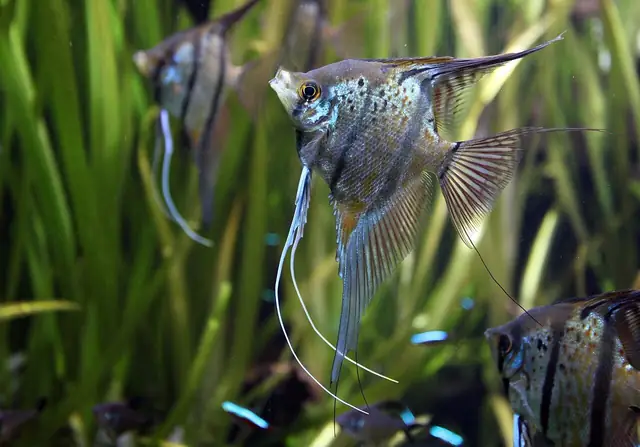
Angelfish
6 in · 29+ gal · 76–84 °F
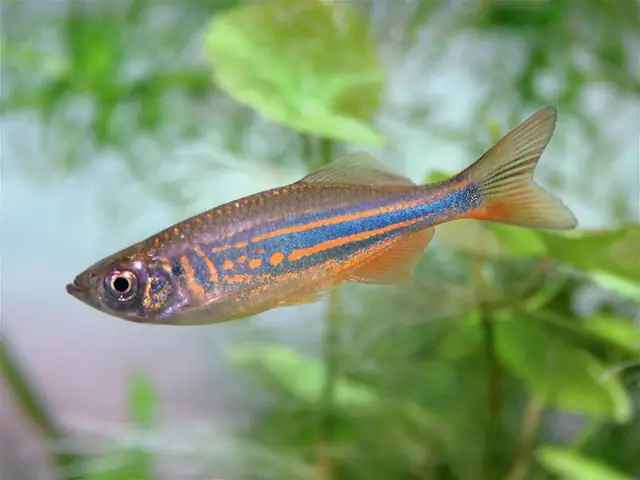
Giant danio
6 in · 55+ gal · 72–79 °F
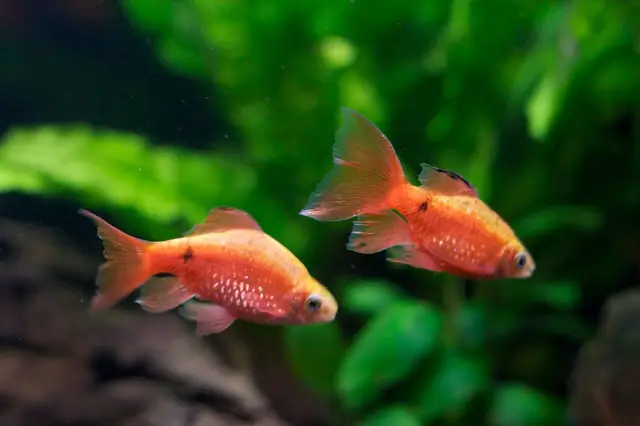
Rosy barb
6 in · 29+ gal · 64–77 °F
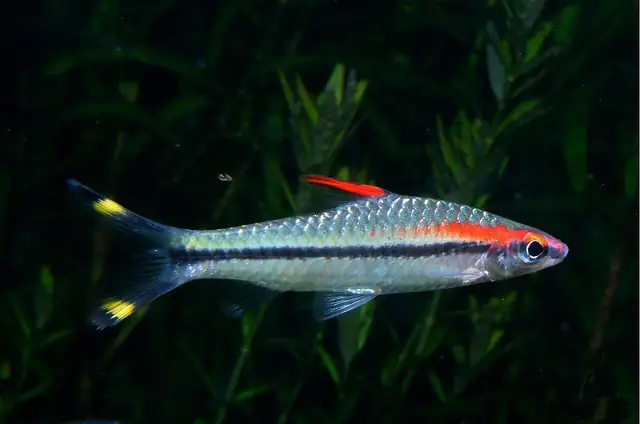
Denison barb
6 in · 55+ gal · 64–77 °F
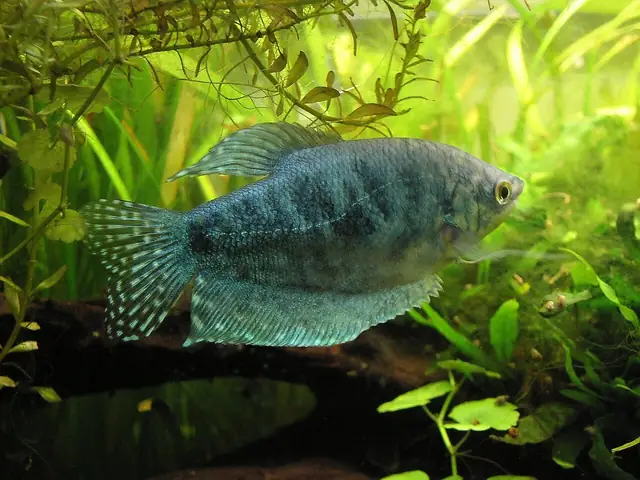
Three-spot (blue) gourami
6 in · 29+ gal · 72–82 °F
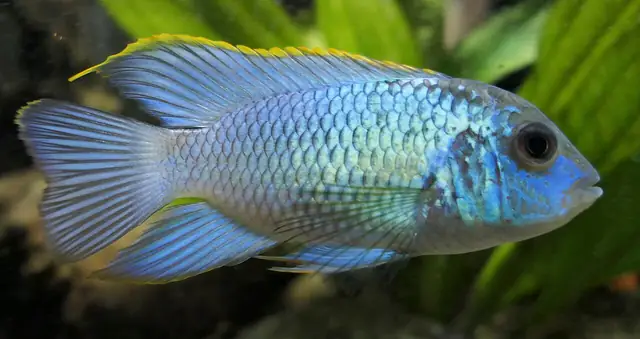
Electric blue acara
6 in · 40+ gal · 72–82 °F
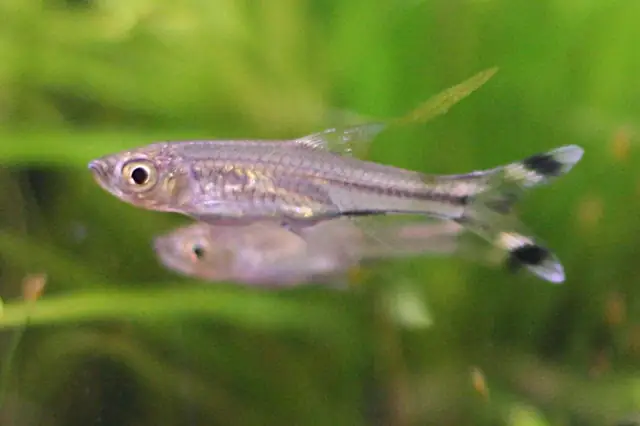
Scissortail rasbora
6 in · 40+ gal · 72–79 °F
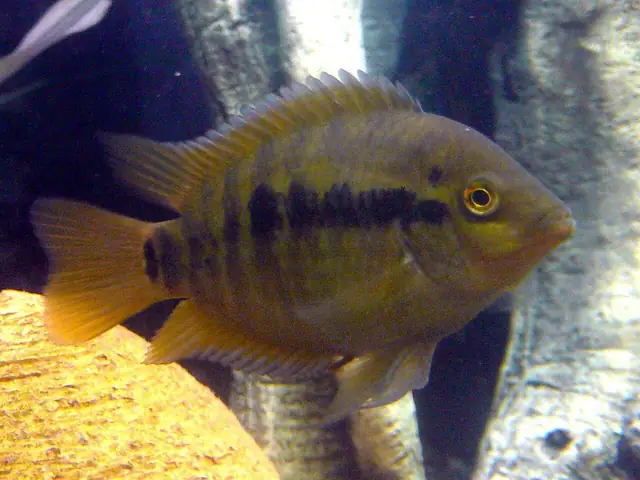
Rainbow cichlid
6 in · 30+ gal · 72–84 °F
Keep apart
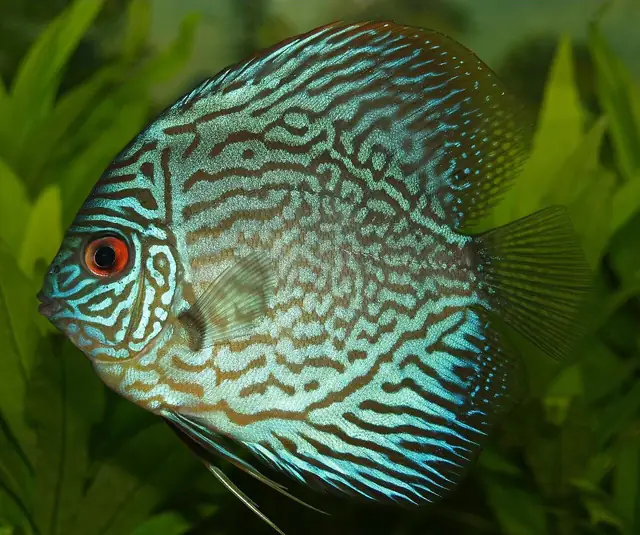 Discus: No shared temperature: flying foxes need 72 to 79 °F, discus 82 to 88 °F.
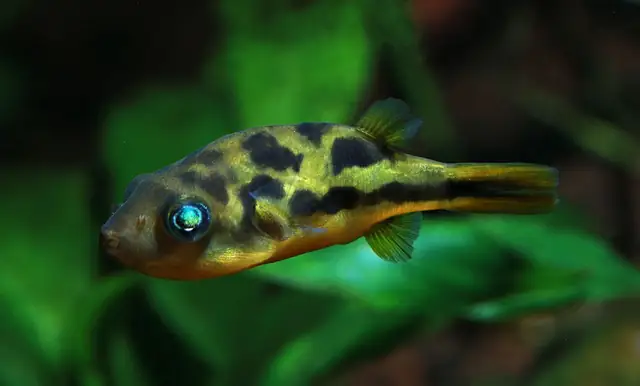 Pea puffer: Pea puffers belong in a tank of their own.
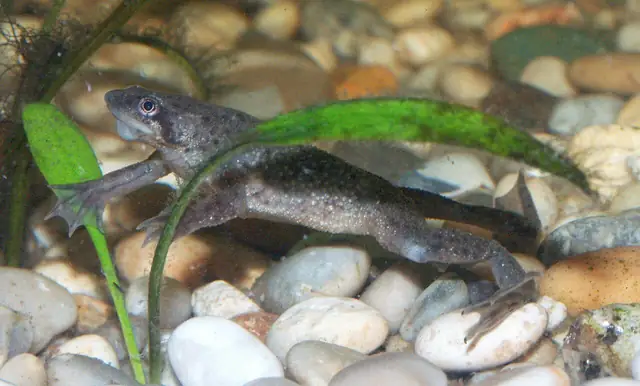 African dwarf frog: African dwarf frogs are slow and get bullied or outcompeted by flying foxes.
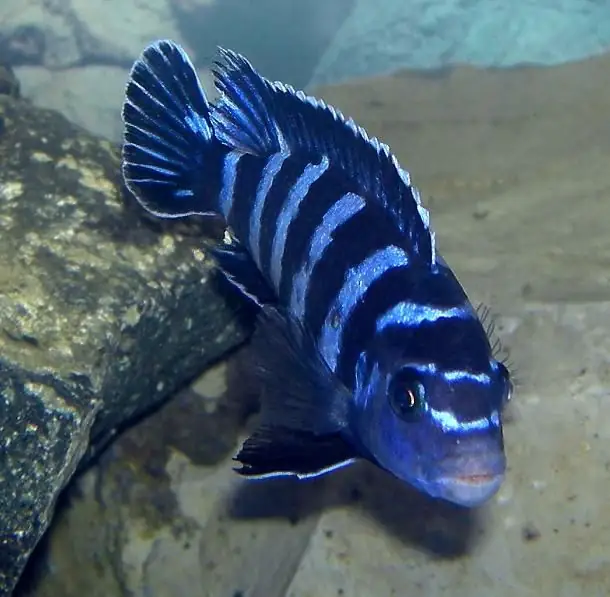 Demasoni cichlid: Demasoni cichlids belong with other Lake Malawi cichlids, not with flying foxes.
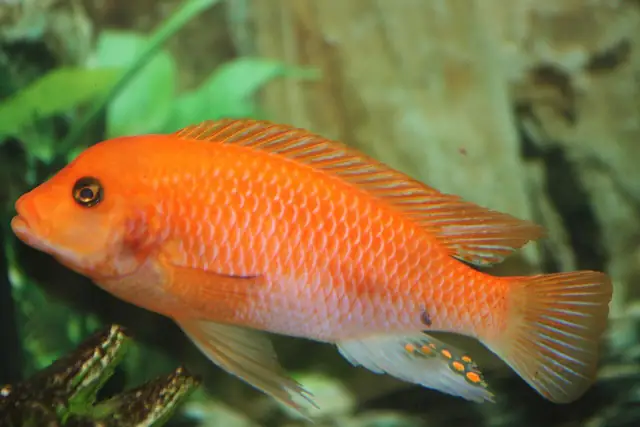 Red zebra cichlid: Red zebra cichlids belong with other Lake Malawi cichlids, not with flying foxes.
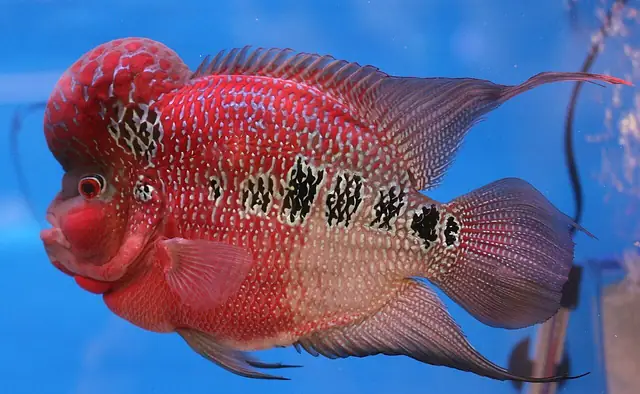 Flowerhorn cichlid: Flowerhorn cichlids belong in a tank of their own.
What a flying fox tank needs
A tank of 40 US gallons or more (such as the 40 gallon breeder) with a tight lid (they jump), and the equipment below.
As an Amazon Associate I earn from qualifying purchases.
Fluval U3
Rated by the maker for up to 40 US gal, which covers a 40 gallon flying fox tank without being built for a far bigger one.
hygger Hang-on-back Canister Filter 7W
Rated by the maker for 20–40 US gal, which covers a 40 gallon flying fox tank without being built for a far bigger one.
hygger Precise Aquarium Heater 200W
Flying foxes need 72 to 79 °F; most homes run cooler, so a heater holds the temperature.
API Freshwater Master Test Kit
Tests ammonia, nitrite, nitrate and pH, the readings that matter most before and after adding flying foxes.
Seachem Prime 100 mL
Removes chlorine and chloramine from tap water at every water change.
Fluval Edge Thermometer
Shows the water temperature at a glance, so you know it stays within 72 to 79 °F.
More choices, each with the reason it is in or out: Filters for a 40 gallon tank · Heaters for a 40 gallon tank. We don’t list fish food: any good brand of the foods under Diet will do. Plan the whole tank's equipment →
Common flying fox problems
- Sold as the Siamese algae eater, which lacks the gold line above the stripe; check before buying if you want a black beard algae eater.
- Two adults fight; keep one per tank.
Test the water first whenever fish look unwell: see what your readings mean, then match the symptom. For disease, a vet who treats fish can diagnose it and advise treatment.
More to compare
Sources
Name, origin and adult size checked against Wikipedia: Epalzeorhynchos kalopterus. Temperature, pH, hardness, group size, lifespan and minimum tank size are common hobby guidance, not figures from that article. Ranges are the range the species tolerates; aim for the middle. Minimum tank sizes are for an adult group. Drawings are our own; photo credits follow.
Photo credits
Real photographs from Wikimedia Commons, resized and cropped to fit; each is used under the license named.
- Flying fox Mirko Hartig, CC BY-SA 2.0 de, via Wikimedia Commons
- Angelfish Citron, CC BY-SA 3.0, via Wikimedia Commons
- Giant danio Faucon, CC BY-SA 2.5, via Wikimedia Commons
- Rosy barb Kkonstan, CC BY 3.0, via Wikimedia Commons
- Denison barb Anandarajkumar, CC BY-SA 3.0, via Wikimedia Commons
- Three-spot (blue) gourami Peter Jung, CC BY-SA 3.0, via Wikimedia Commons
- Electric blue acara 5snake5, CC0, via Wikimedia Commons
- Scissortail rasbora Lerdsuwa, CC BY-SA 3.0, via Wikimedia Commons
- Rainbow cichlid Happy Birthday To You!, Public domain, via Wikimedia Commons
- Discus Patrick Farrelly, Public domain, via Wikimedia Commons
- Pea puffer Beta Mahatvaraj, CC BY-SA 4.0, via Wikimedia Commons
- African dwarf frog Stuart Halliday, CC BY 3.0, via Wikimedia Commons
- Demasoni cichlid lee Nachtigal, CC BY 2.0, via Wikimedia Commons
- Red zebra cichlid Maha Dinesh, CC BY-SA 3.0, via Wikimedia Commons
- Flowerhorn cichlid Lerdsuwa, CC BY-SA 3.0, via Wikimedia Commons
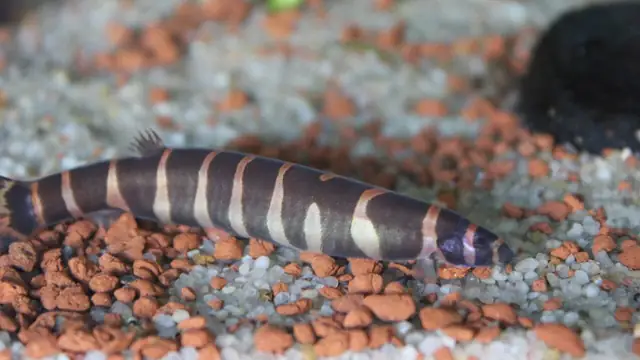
- Kuhli loach Iidkk, CC BY-SA 4.0, via Wikimedia Commons
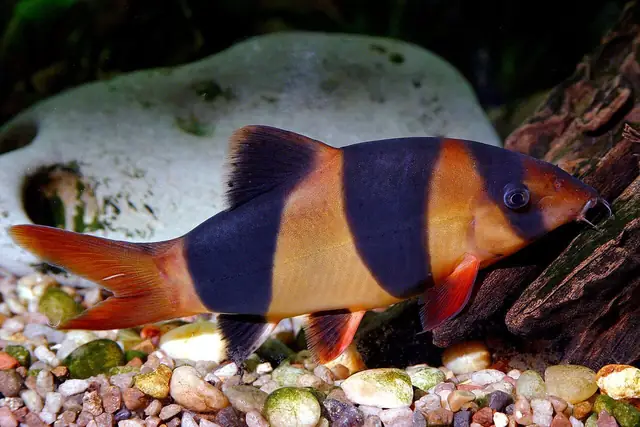
- Clown loach Vlad Butsky, CC BY 2.0, via Wikimedia Commons
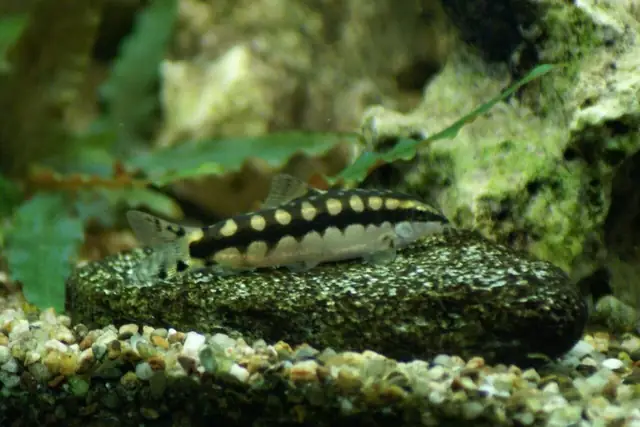
- Dwarf chain loach Stefan Maurer, CC BY-SA 2.0, via Wikimedia Commons
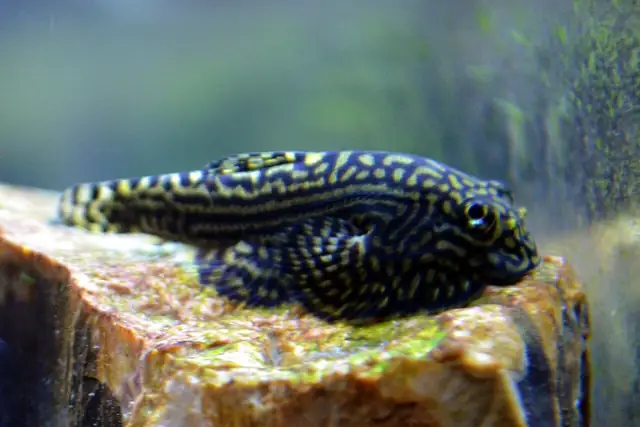
- Reticulated hillstream loach Spiketooth, CC BY-SA 3.0, via Wikimedia Commons


