
Red-tail catfish care
Phractocephalus hemioliopterus · Amazon, Orinoco and Essequibo basins of South America
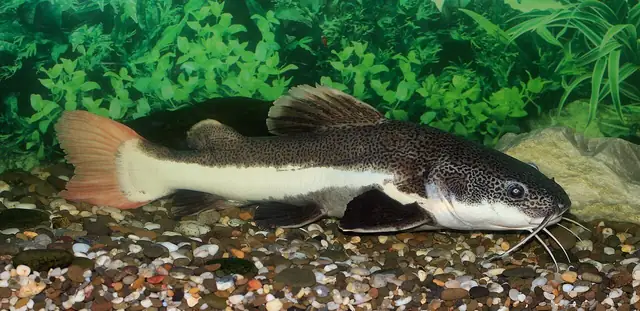
Red-tail catfish are sold at 2 or 3 inches but grow to about 4 feet, and adults need a tank of about 2,600 gallons, the size of a public aquarium exhibit.
- Tank size
- 2,600 US gal or larger
- Temperature
- 72 to 80 °F (22 to 27 °C)
- Group size
- Alone (one per tank)
- Temperament
- Semi-aggressive
- Adult size
- 48 in (adults average 3½ to 4½ ft; up to about 6 ft recorded)
- pH
- 6 to 7.5
- Hardness (GH)
- 2 to 15 dGH
- Lifespan
- 15 to 20 years
- Diet
- Carnivore
- Care level
- Demanding
Even a 210 gallon is too small
72½ × 24½ × 29⅝ in outsideHow to keep red-tail catfish
Red-tail catfish are sold at 2 or 3 inches but grow to about 4 feet, and adults need a tank of about 2,600 gallons, the size of a public aquarium exhibit. No home aquarium can house one for life.
Diet: Carnivore: large sinking pellets, fish, shrimp. Fish food types compared · how often to feed.
Where they swim: Bottom of the tank.
Red-tail catfish tank mates
Share the temperature and water, and neither side eats, nips or bullies the other. Check the full group in the stocking checker.
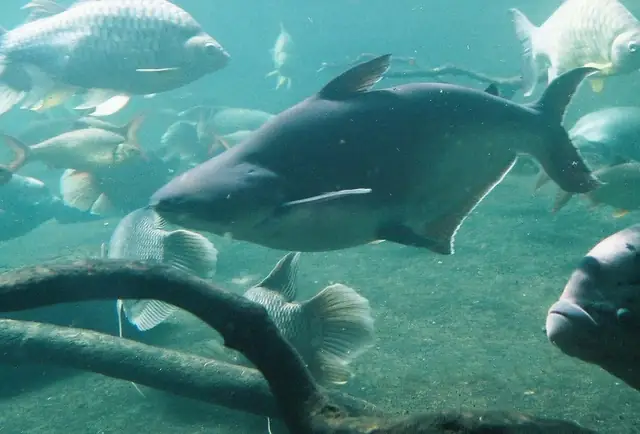
Iridescent shark
51 in · 1,000+ gal · 72–79 °F
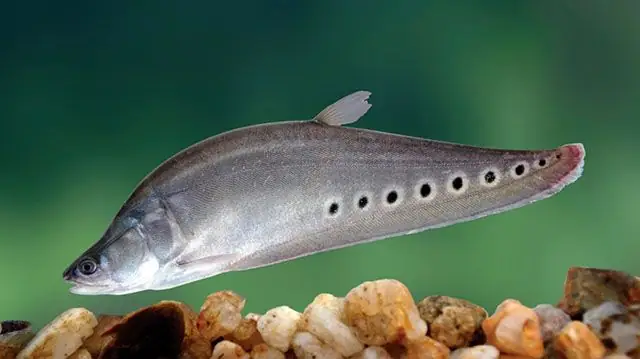
Clown knifefish
39 in · 250+ gal · 75–82 °F
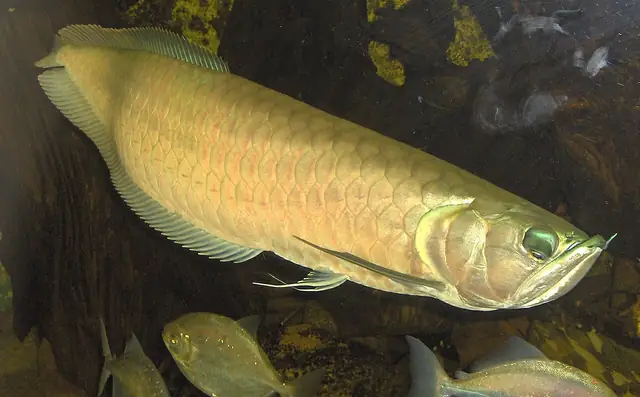
Silver arowana
36 in · 250+ gal · 75–82 °F
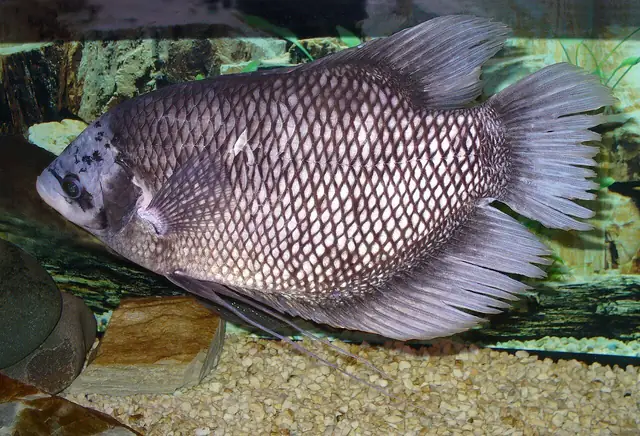
Giant gourami
18 in · 300+ gal · 72–86 °F
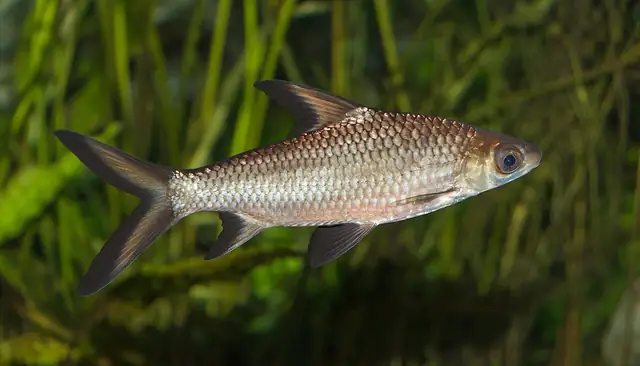
Bala shark
14 in · 125+ gal · 72–82 °F
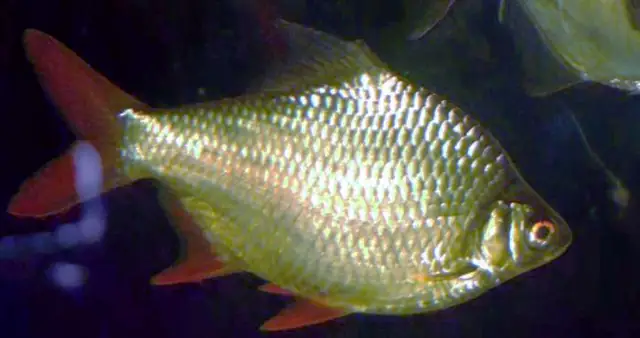
Tinfoil barb
14 in · 150+ gal · 72–77 °F
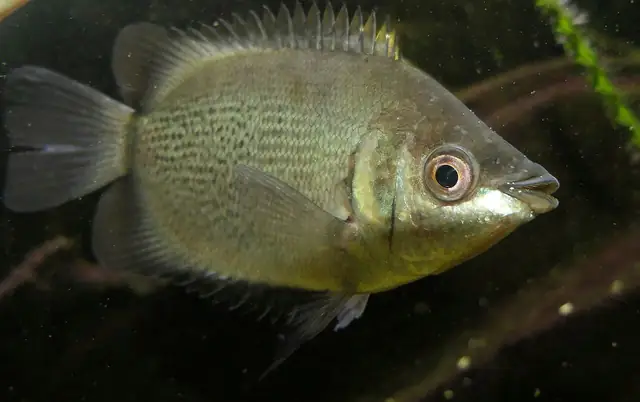
Kissing gourami
12 in · 75+ gal · 72–82 °F
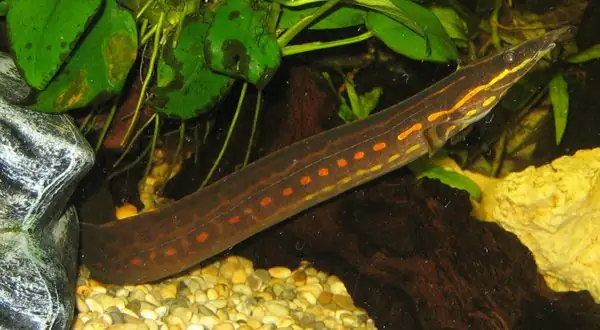
Fire eel
39 in · 180+ gal · 75–82 °F
Keep apart
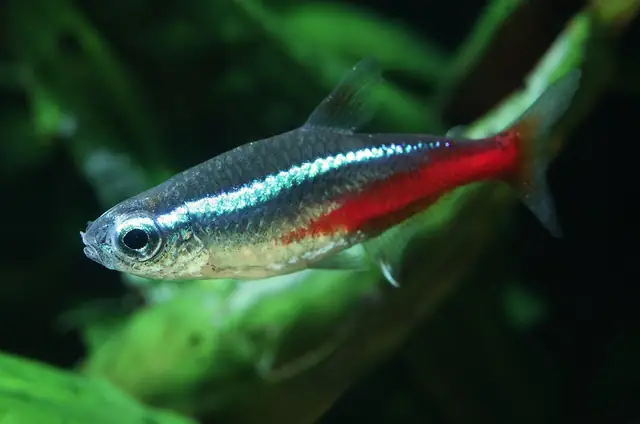 Neon tetra: Adult red-tail catfish eat fish under about 12 in; neon tetras grow to 1.6 in.
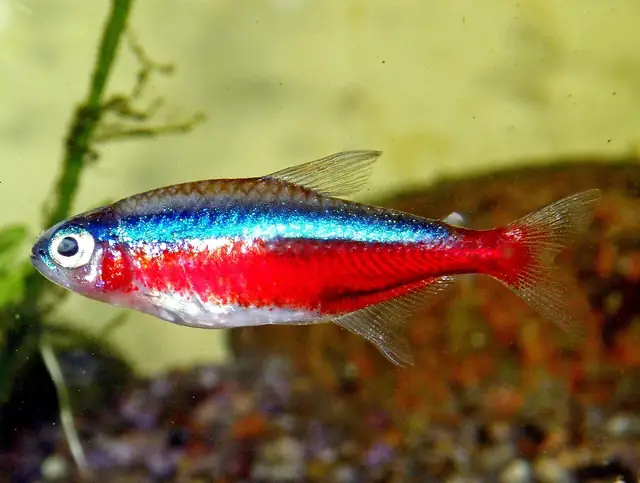 Cardinal tetra: Adult red-tail catfish eat fish under about 12 in; cardinal tetras grow to 1.2 in.
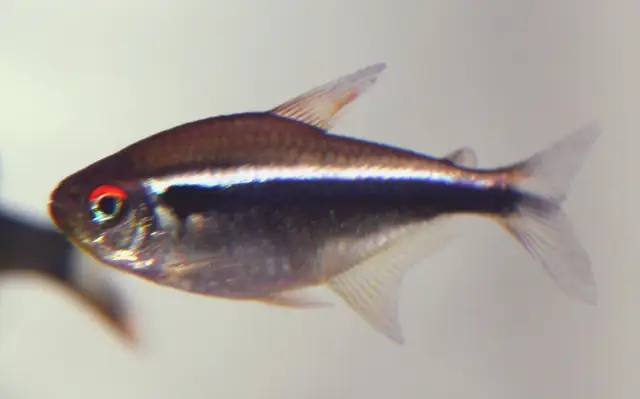 Black neon tetra: Adult red-tail catfish eat fish under about 12 in; black neon tetras grow to 1.5 in.
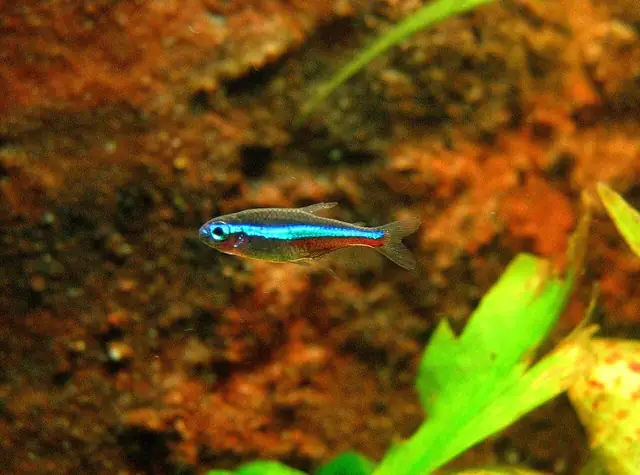 Green neon tetra: Adult red-tail catfish eat fish under about 12 in; green neon tetras grow to 1 in.
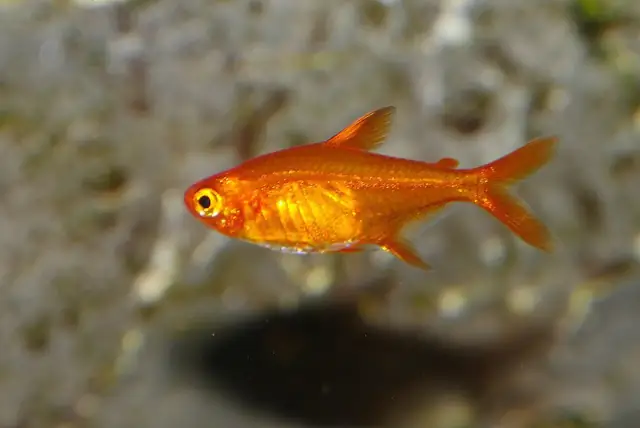 Ember tetra: Adult red-tail catfish eat fish under about 12 in; ember tetras grow to 1.2 in.
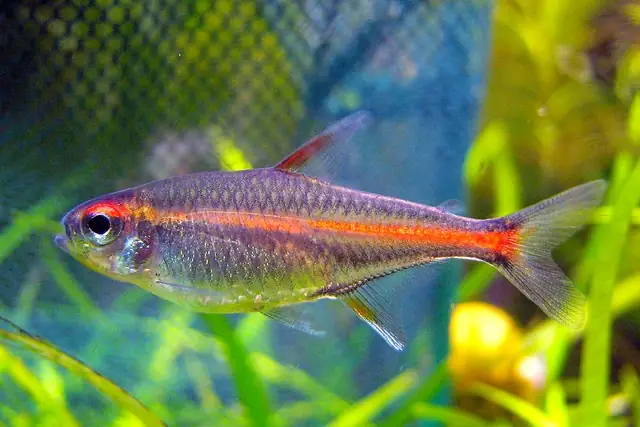 Glowlight tetra: Adult red-tail catfish eat fish under about 12 in; glowlight tetras grow to 1.5 in.
What a red-tail catfish tank needs
A tank of 2,600 US gallons or more with a cover, and the equipment below.
As an Amazon Associate I earn from qualifying purchases.
API Freshwater Master Test Kit
Tests ammonia, nitrite, nitrate and pH, the readings that matter most before and after adding red-tail catfish.
Seachem Prime 100 mL
Removes chlorine and chloramine from tap water at every water change.
Fluval Edge Thermometer
Shows the water temperature at a glance, so you know it stays within 72 to 80 °F.
We don’t list fish food: any good brand of the foods under Diet will do. Plan the whole tank's equipment →
Common red-tail catfish problems
- Even small juveniles swallow tetras and guppies.
- They swallow gravel and small decorations; keep loose objects out of the tank.
Test the water first whenever fish look unwell: see what your readings mean, then match the symptom. For disease, a vet who treats fish can diagnose it and advise treatment.
More to compare
Sources
Name, origin and adult size checked against Wikipedia: Phractocephalus hemioliopterus. Temperature, pH, hardness, group size, lifespan and minimum tank size are common hobby guidance, not figures from that article. Ranges are the range the species tolerates; aim for the middle. Minimum tank sizes are for an adult group. Drawings are our own; photo credits follow.
Photo credits
Real photographs from Wikimedia Commons, resized and cropped to fit; each is used under the license named.
- Red-tail catfish George Chernilevsky, CC BY-SA 4.0, via Wikimedia Commons
- Iridescent shark Melanochromis, CC BY-SA 3.0, via Wikimedia Commons
- Clown knifefish Parkourprincess, CC BY-SA 4.0, via Wikimedia Commons
- Silver arowana Qwertzy2, CC BY-SA 3.0, via Wikimedia Commons
- Giant gourami George Chernilevsky, Public domain, via Wikimedia Commons
- Bala shark H. Zell, CC BY-SA 3.0, via Wikimedia Commons
- Tinfoil barb Derek Ramsey (Ram-Man), CC BY-SA 2.5, via Wikimedia Commons
- Kissing gourami 5snake5, CC BY-SA 4.0, via Wikimedia Commons
- Fire eel Llandor, CC BY-SA 3.0, via Wikimedia Commons
- Neon tetra Holger Krisp, CC BY 3.0, via Wikimedia Commons
- Cardinal tetra CHUCAO, CC BY-SA 3.0, via Wikimedia Commons
- Black neon tetra Debivort, CC BY-SA 3.0, via Wikimedia Commons
- Green neon tetra Sascha Biedermann, CC BY-SA 2.5, via Wikimedia Commons
- Ember tetra Klaus Rudloff, CC BY-SA 4.0, via Wikimedia Commons
- Glowlight tetra gonzalovalenzuela; cropped by Kyknos, CC BY 2.0, via Wikimedia Commons
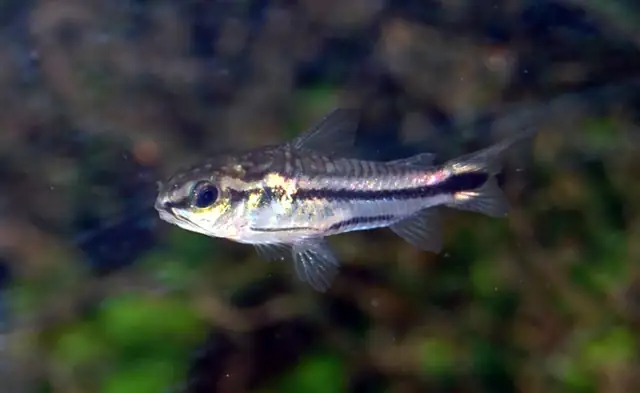
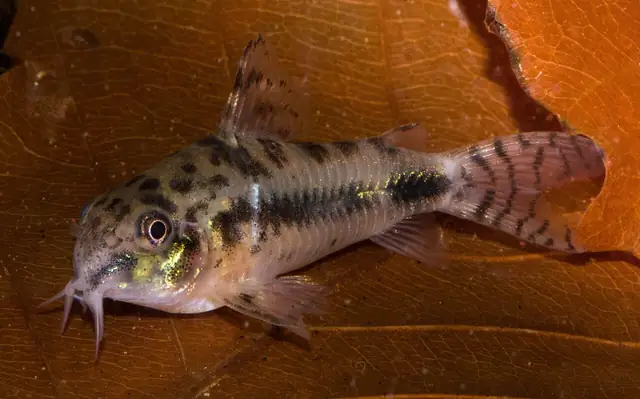
- Pygmy corydoras Birger A, CC BY-SA 3.0, via Wikimedia Commons
- Salt-and-pepper corydoras D.W., CC0, via Wikimedia Commons
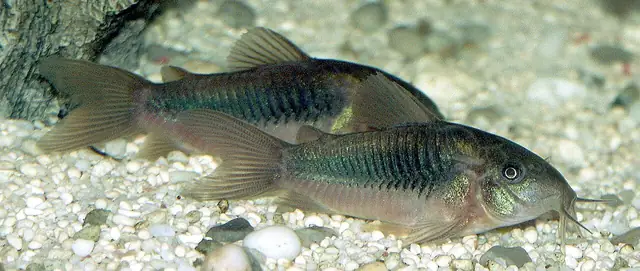
- Bronze corydoras Quatermass (English Wikipedia), Public domain, via Wikimedia Commons
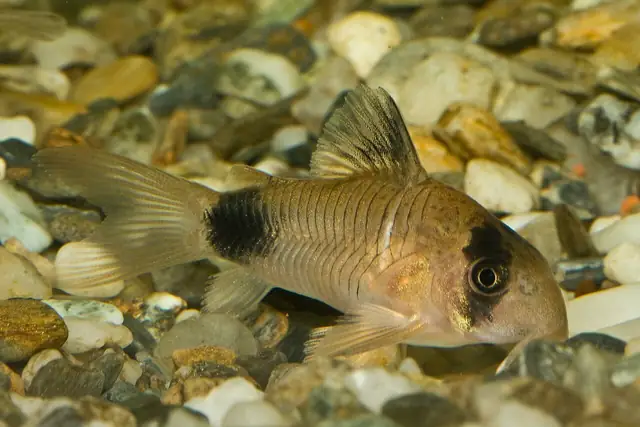
- Panda corydoras Chronotopian, CC BY-SA 3.0, via Wikimedia Commons


