
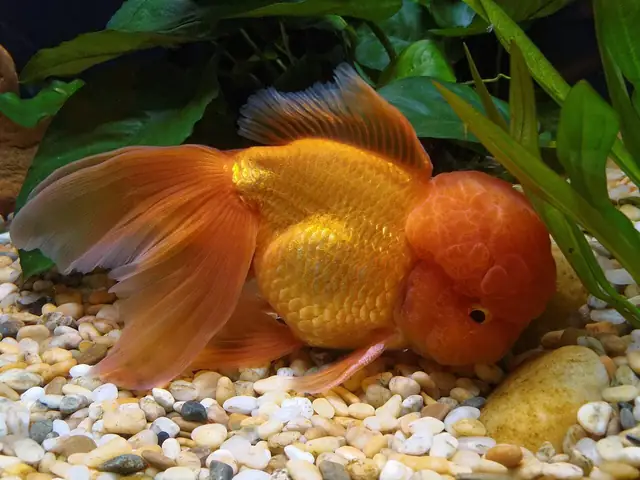

Why goldfish and plants clash
Goldfish graze on plants all day and sift the substrate for food, so soft leaves get eaten and anything with shallow roots ends up floating. Only a few plants hold out, and even those need protecting from being uprooted.
Plants that last
- Java fern (68 to 82 °F) and java moss (60 to 82 °F), tied to wood or rock: tough, bitter leaves that most goldfish leave alone.
- Vallisneria (64 to 82 °F): fast and tough enough to outgrow some grazing.
- Hornwort (60 to 85 °F) and anacharis (60 to 78 °F): soft, but they grow faster than most goldfish eat, so they double as fresh food.
- Marimo balls (60 to 77 °F) roll around without roots to pull up.
- Anubias and crypts (72 to 82 °F): leathery or bitter enough to survive, but they want warmer water than goldfish, so they only grow at about 72 °F and above.
Planting so they stay put
Tie or glue java fern, anubias and moss to rock or wood instead of planting them. Plant vallisneria and crypts in a small pot of gravel or behind large, smooth stones so goldfish cannot dig them out. Fine sand is safer for goldfish than gravel small enough to swallow. How to attach plants
What gets eaten first
Fine-leaved stem plants, carpets, cabomba and any delicate new growth disappear quickly. So do floating plants such as duckweed, which some keepers grow in a separate tub as a goldfish snack. What to feed goldfish · Types of goldfish