
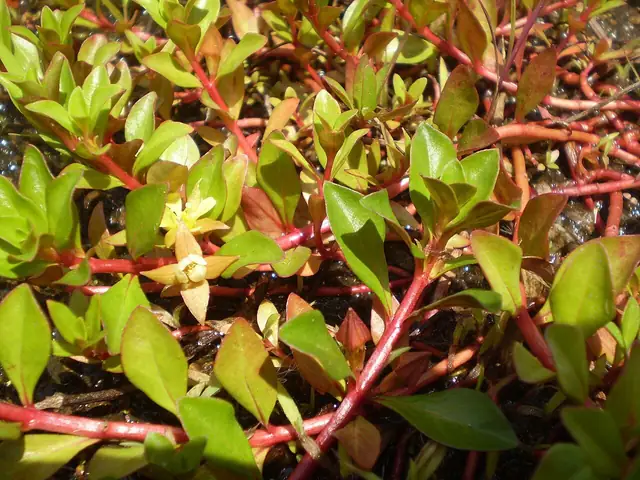

Why plants turn red
The red comes from anthocyanins, pigments a plant makes in its leaves, partly to shade them from more light than they can use; the reds of autumn leaves are the same pigments. A red aquarium plant makes more of them the stronger its light, which is why the tops of red stem plants, nearest the lamp, are the reddest part, and why the same plant grows greener in a dimmer tank.
Red plants by the light they need
| Plant | Light | Its color |
|---|---|---|
| Red tiger lotus | Medium | Red to maroon leaves in most tanks; the green form stays green |
| Cryptocoryne wendtii ‘Red’ or ‘Bronze’ | Low | Brownish red to bronze, even under a basic light |
| Ludwigia repens | Medium | Red undersides and coppery tops; greener in low light |
| Red root floaters | Medium to high | Leaves edged red and red roots in strong light near the surface; green in low light |
| Rotala rotundifolia | Medium to high | Pink tops in medium light, almost wine red under a strong light; drops its lower leaves when the light is too weak |
| Alternanthera reineckii | Medium to high | Pink to purple-red; stretches and fades when the light is too weak |
| Ludwigia ‘Super Red’ (Ludwigia palustris) | High | Deep red with a strong light, CO₂ and iron |
For one bright accent in a low-tech tank, a red tiger lotus or a group of red crypts gives more color than a stem plant that needs a stronger light than the tank has. More low-light plants
Bringing out the red
- Light first. A stronger light, or a stem plant allowed to grow up near the surface, does more than anything else. Trim tall plants that shade it. Choosing a planted light
- Iron. Red plants need iron to color; pale, washed-out new leaves on a red plant often mean too little. A liquid fertilizer with iron, dosed every week, fixes it. Your fertilizer dose
- CO₂ for the demanding ones. Alternanthera and Ludwigia ‘Super Red’ grow dense and red with injected CO₂; without it they stretch and fade. Do you need CO₂?
- Patience. New growth shows the change; old leaves keep the color they grew with. Give it three or four weeks.
Some keepers find reds deepen when nitrate runs low, but starving the plants stunts them and invites algae. Change the light and the iron first.
Why a new red plant turned green
Most plants are grown out of water on farms, in bright greenhouses, where they color strongly. Under water, in a tank with a fraction of that light, the new leaves grow greener and the old red ones often melt away. That is the plant adjusting to your tank, not a disease. If you want the red back, the light is what to change. Plant melt