
Everglades pygmy sunfish care
Elassoma evergladei · Swamps and slow streams of the southeastern United States, from North Carolina to Florida and Alabama
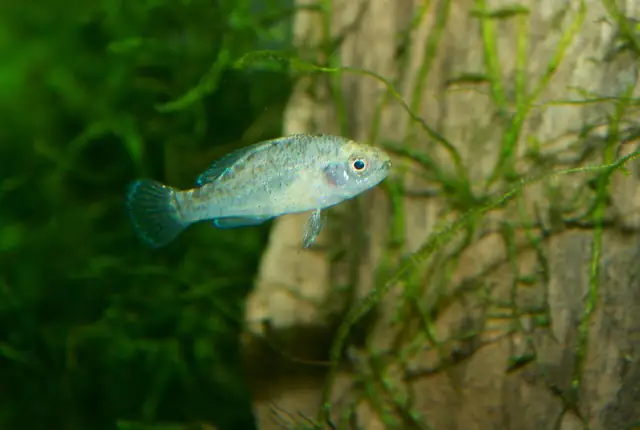
Everglades pygmy sunfish are tiny native sunfish, about an inch, from swamps of the southeastern United States: brown with dark spots and an iridescent blue or gold crescent behind each eye.
- Tank size
- 5 US gal or larger
- Temperature
- 55 to 80 °F (13 to 27 °C)
- Group size
- 2 or more
- Temperament
- Peaceful
- Adult size
- 1.3 in (most reach about 1 in)
- pH
- 6.5 to 7.5
- Hardness (GH)
- 4 to 15 dGH
- Lifespan
- 2 to 3 years
- Diet
- Micropredator
- Care level
- Moderate
In a 5 gallon: Aqueon 5½
16 3/16 × 8⅜ × 10½ in outsideHow to keep Everglades pygmy sunfish
Everglades pygmy sunfish are tiny native sunfish, about an inch, from swamps of the southeastern United States: brown with dark spots and an iridescent blue or gold crescent behind each eye. A pair or a small group suits a heavily planted 5 to 10 gallon tank of their own, with no heater needed; most eat only live and frozen food.
Diet: Micropredator: baby brine shrimp, daphnia, frozen bloodworm; most refuse flakes. Fish food types compared · how often to feed.
Where they swim: Bottom of the tank.
Everglades pygmy sunfish tank mates
Share the temperature and water, and neither side eats, nips or bullies the other. Check the full group in the stocking checker.
Everglades pygmy sunfish belong in a tank of their own: they nip, bully or eat most tankmates.
Keep apart
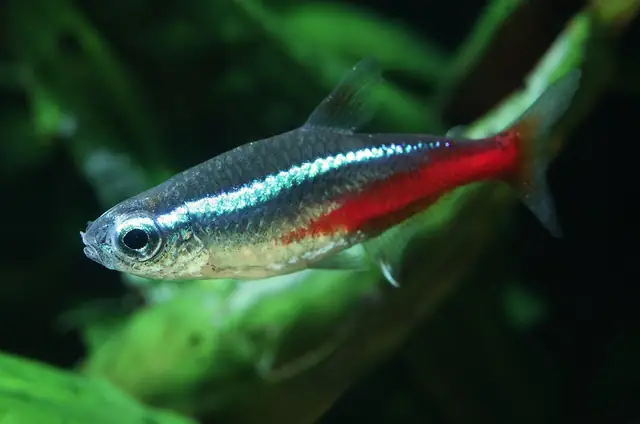 Neon tetra: Everglades pygmy sunfish belong in a tank of their own.
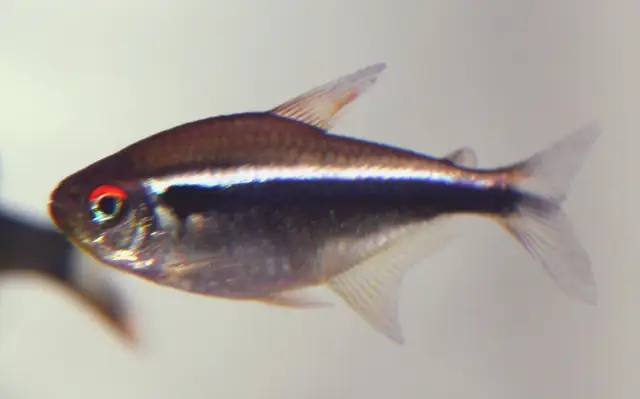 Black neon tetra: Everglades pygmy sunfish belong in a tank of their own.
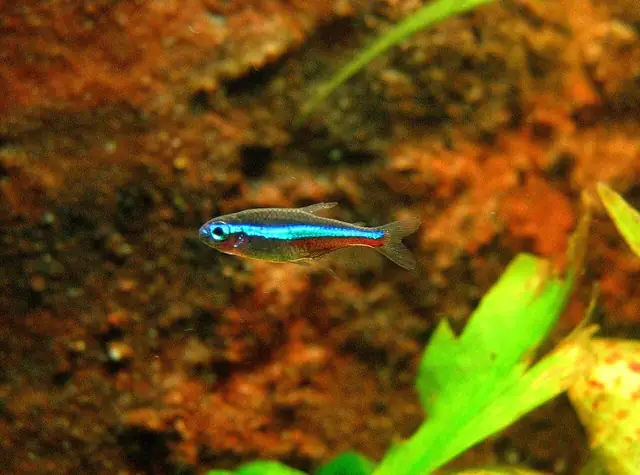 Green neon tetra: Everglades pygmy sunfish belong in a tank of their own.
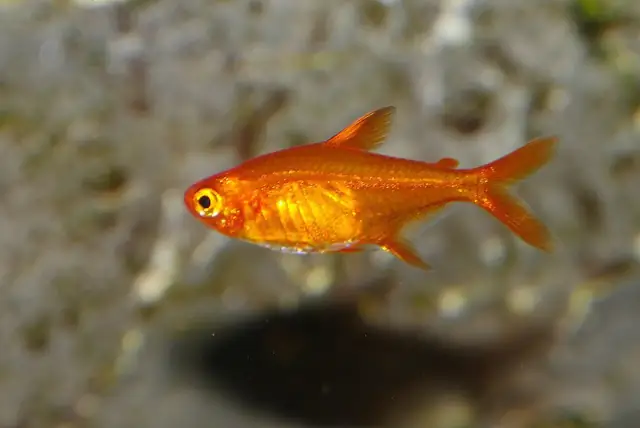 Ember tetra: Everglades pygmy sunfish belong in a tank of their own.
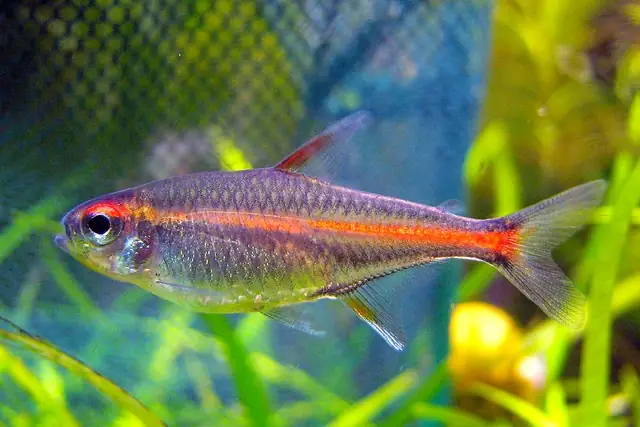 Glowlight tetra: Everglades pygmy sunfish belong in a tank of their own.
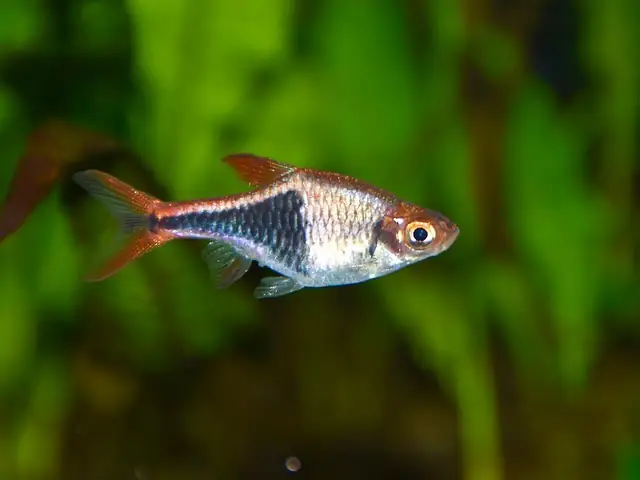 Harlequin rasbora: Everglades pygmy sunfish belong in a tank of their own.
What an Everglades pygmy sunfish tank needs
A tank of 5 US gallons or more (such as the 5 gallon: Aqueon 5½) with a cover, and the equipment below. Everglades pygmy sunfish are comfortable at room temperature, so a heater is optional in a normal home.
As an Amazon Associate I earn from qualifying purchases.
Aquarium Co-Op Easy Flow Sponge Filter, Nano
A sponge filter gives gentle flow and cannot pull in small fish. It runs from an air pump, with airline tubing and a check valve, all sold separately.
Aqueon QuietFlow Internal Power Filter up to 5 gal
Rated by the maker for up to 5 US gal, which covers a 5 gallon Everglades pygmy sunfish tank without being built for a far bigger one.
hygger Hang-on-back Canister Filter 5W
Rated by the maker for up to 10 US gal, which covers a 5 gallon Everglades pygmy sunfish tank without being built for a far bigger one. Its surface skimmer can pull in small fish: cover it with sponge or mesh, as hygger advises.
API Freshwater Master Test Kit
Tests ammonia, nitrite, nitrate and pH, the readings that matter most before and after adding Everglades pygmy sunfish.
Seachem Prime 100 mL
Removes chlorine and chloramine from tap water at every water change.
Fluval Edge Thermometer
Shows the water temperature at a glance, but its display reads 64 to 86 °F, so it can’t show the bottom of the 55 to 80 °F Everglades pygmy sunfish range. Check it with a second thermometer that reads below 64 °F.
More choices, each with the reason it is in or out: Filters for a 5 gallon tank. We don’t list fish food: any good brand of the foods under Diet will do. Plan the whole tank's equipment →
Common Everglades pygmy sunfish problems
- They seldom take flakes; plan on live and frozen foods.
- Faster fish take their food, and they hunt baby shrimp; keep them in a tank of their own.
Test the water first whenever fish look unwell: see what your readings mean, then match the symptom. For disease, a vet who treats fish can diagnose it and advise treatment.
More to compare
Sources
Name, origin and adult size checked against Wikipedia: Elassoma evergladei. Temperature, pH, hardness, group size, lifespan and minimum tank size are common hobby guidance, not figures from that article. Ranges are the range the species tolerates; aim for the middle. Minimum tank sizes are for an adult group. Drawings are our own; photo credits follow.
Photo credits
Real photographs from Wikimedia Commons, resized and cropped to fit; each is used under the license named.
- Everglades pygmy sunfish Brian Gratwicke, CC BY 2.0, via Wikimedia Commons
- Neon tetra Holger Krisp, CC BY 3.0, via Wikimedia Commons
- Black neon tetra Debivort, CC BY-SA 3.0, via Wikimedia Commons
- Green neon tetra Sascha Biedermann, CC BY-SA 2.5, via Wikimedia Commons
- Ember tetra Klaus Rudloff, CC BY-SA 4.0, via Wikimedia Commons
- Glowlight tetra gonzalovalenzuela; cropped by Kyknos, CC BY 2.0, via Wikimedia Commons
- Harlequin rasbora NasserHalaweh, CC BY-SA 4.0, via Wikimedia Commons
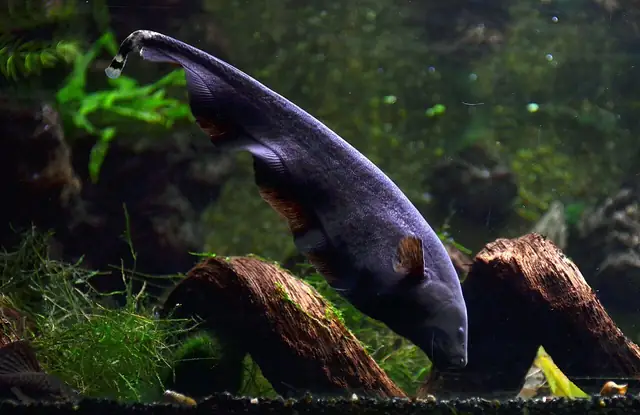
- Black ghost knifefish Vassil, CC0, via Wikimedia Commons
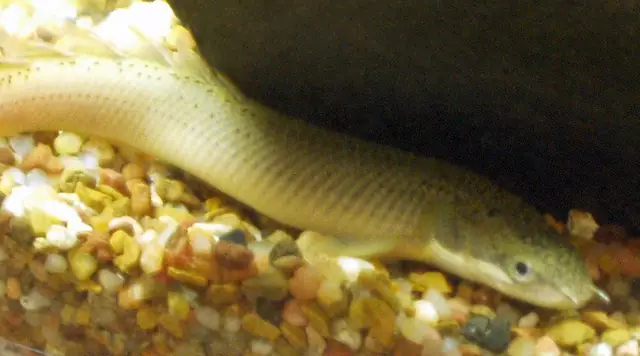
- Senegal bichir Zhyla at English Wikipedia, CC BY-SA 3.0, via Wikimedia Commons
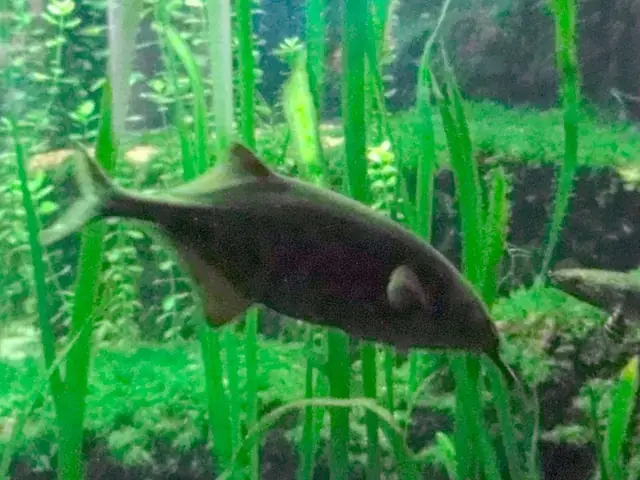
- Elephantnose fish Jutta234, CC BY-SA 3.0, via Wikimedia Commons
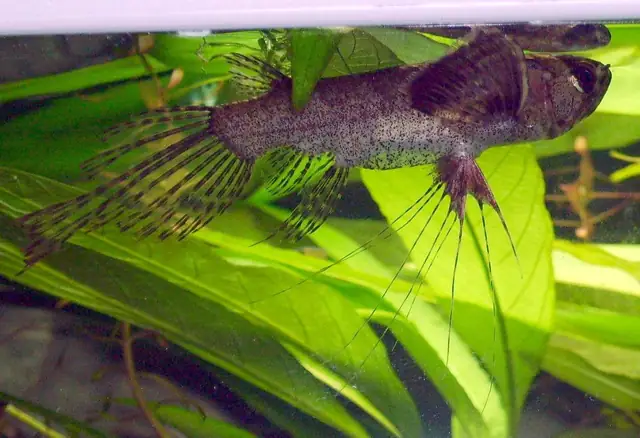
- African butterflyfish Toniher, CC BY-SA 3.0, via Wikimedia Commons


