
Black-barred limia care
Limia nigrofasciata · Lake Miragoâne, Haiti
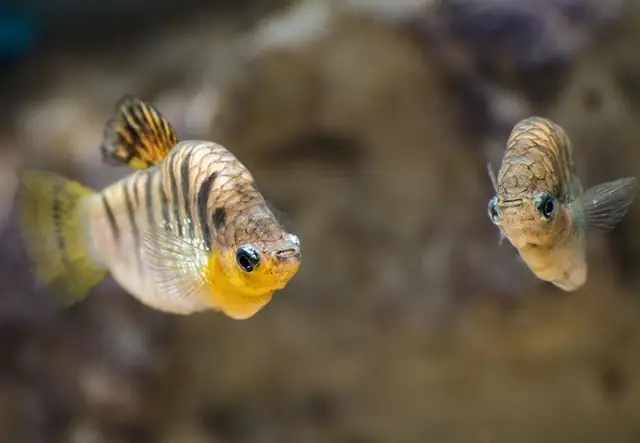
The black-barred limia is a livebearer from a single lake in Haiti: glittering gold with dark bars, and old males grow a hump and a tall, purple-flecked back fin.
- Tank size
- 20 US gal or larger
- Temperature
- 75 to 79 °F (24 to 26 °C)
- Group size
- 5 or more
- Temperament
- Peaceful
- Adult size
- 2 in (standard length, without the tail)
- pH
- 7 to 8.5
- Hardness (GH)
- 10 to 25 dGH
- Lifespan
- 2 to 4 years
- Diet
- Omnivore
- Care level
- Moderate
In a 20 gallon long
30¼ × 12½ × 12¾ in outsideHow to keep black-barred limias
The black-barred limia is a livebearer from a single lake in Haiti: glittering gold with dark bars, and old males grow a hump and a tall, purple-flecked back fin. It lives in schools, so keep five or more, more females than males, in a 20 gallon or larger tank of hard water held steady at 75 to 79 °F, and feed plenty of greens: in the wild it eats only algae and detritus. It is critically endangered in the wild, and a close relative, Limia islai, is often sold under its name.
Diet: Omnivore: algae and vegetable flakes, small frozen foods. Fish food types compared · how often to feed.
Where they swim: Middle of the tank.
Black-barred limia tank mates
Share the temperature and water, and neither side eats, nips or bullies the other. Check the full group in the stocking checker.
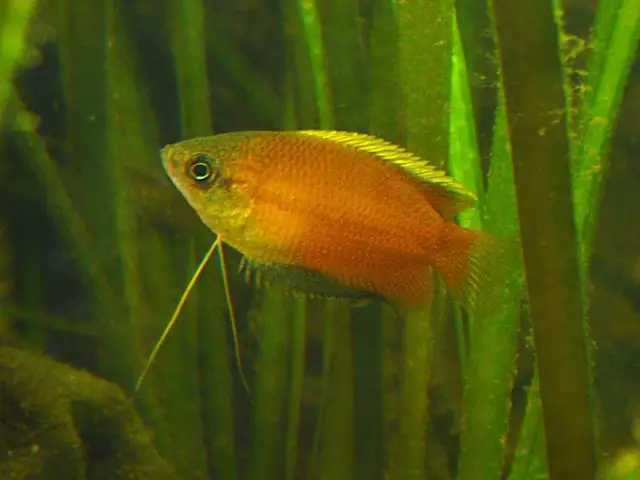
Honey gourami
2 in · 10+ gal · 72–82 °F
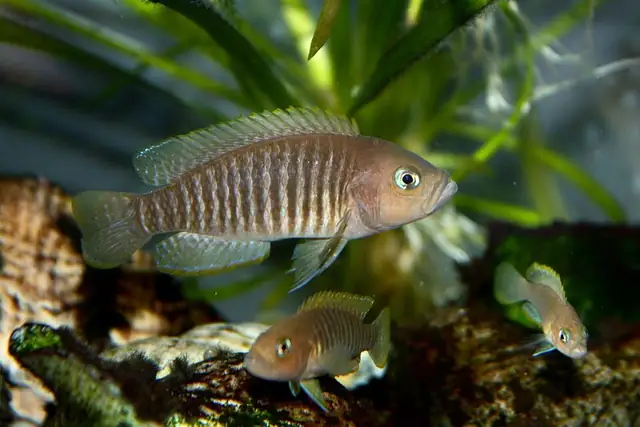
Shell-dweller cichlid
2 in · 10+ gal · 75–80 °F
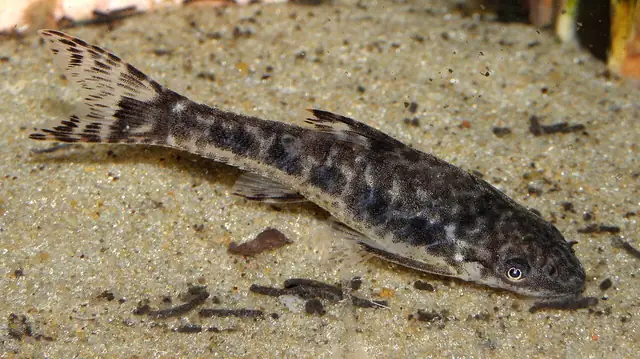
Otocinclus
2 in · 20+ gal · 72–79 °F
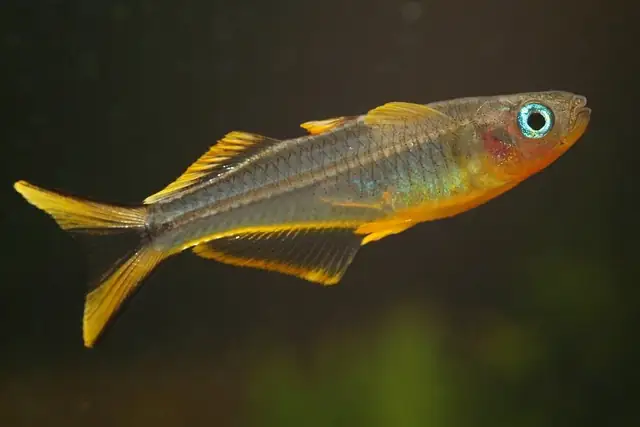
Forktail blue-eye rainbowfish
2 in · 10+ gal · 72–80 °F
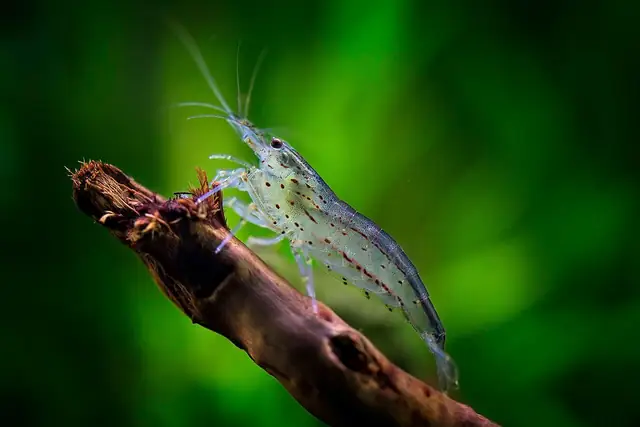
Amano shrimp
2 in · 10+ gal · 68–80 °F
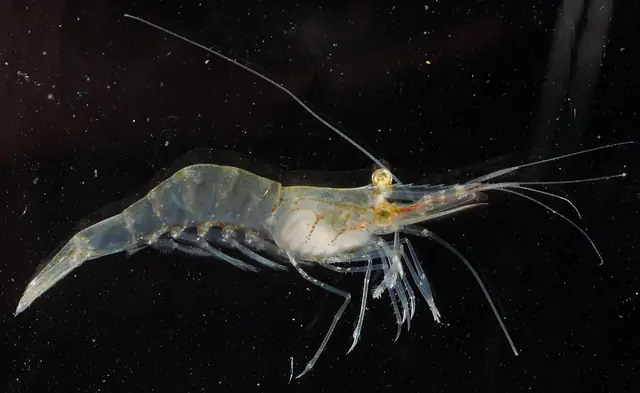
Ghost shrimp
2 in · 5+ gal · 65–80 °F
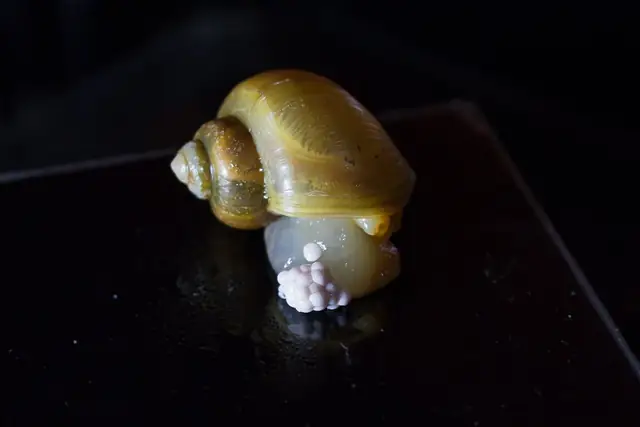
Mystery snail
2 in · 10+ gal · 68–82 °F
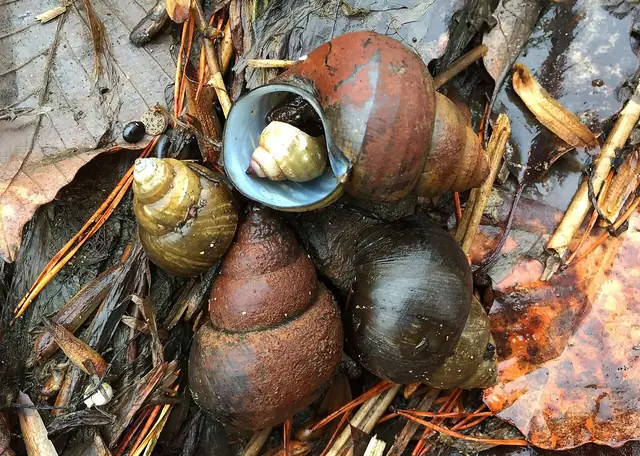
Japanese trapdoor snail
2 in · 10+ gal · 60–80 °F
Keep apart
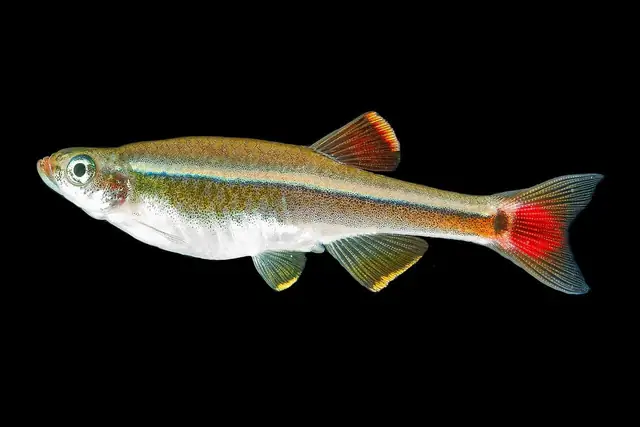 White cloud mountain minnow: No shared temperature: black-barred limias need 75 to 79 °F, white cloud mountain minnows 64 to 72 °F.
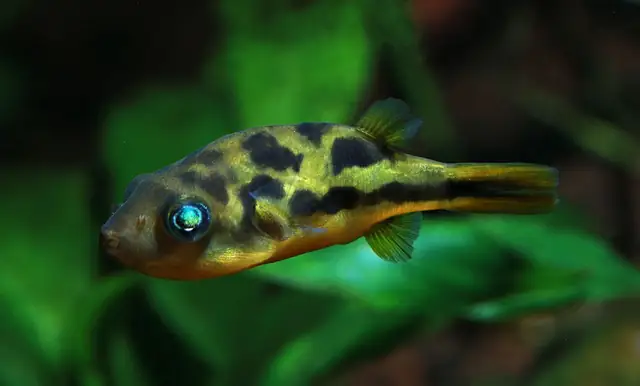 Pea puffer: Pea puffers belong in a tank of their own.
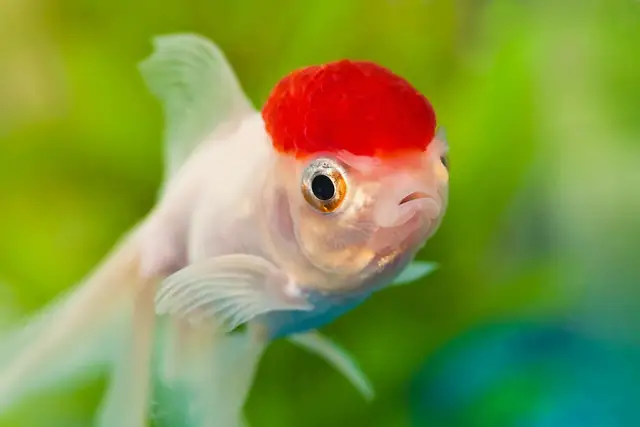 Fancy goldfish: No shared temperature: black-barred limias need 75 to 79 °F, fancy goldfish 64 to 74 °F.
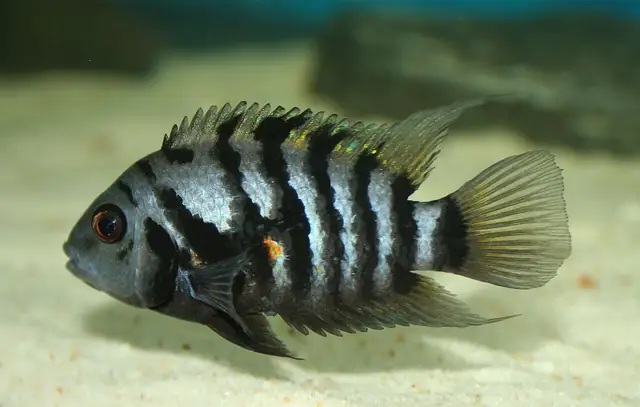 Convict cichlid: Convict cichlids are aggressive towards peaceful fish such as black-barred limias.
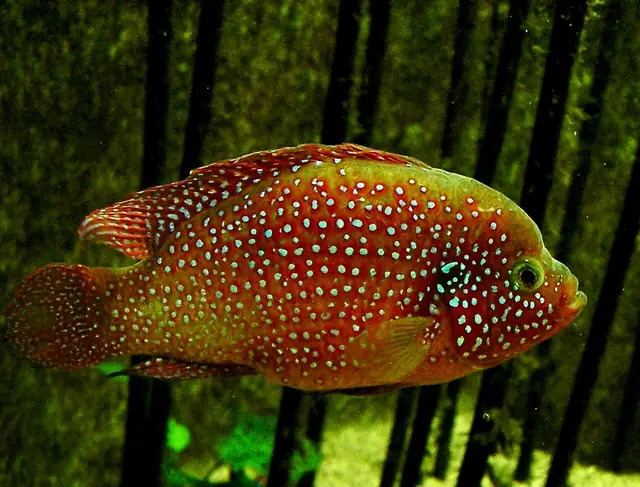 Jewel cichlid: Jewel cichlids are aggressive towards peaceful fish such as black-barred limias.
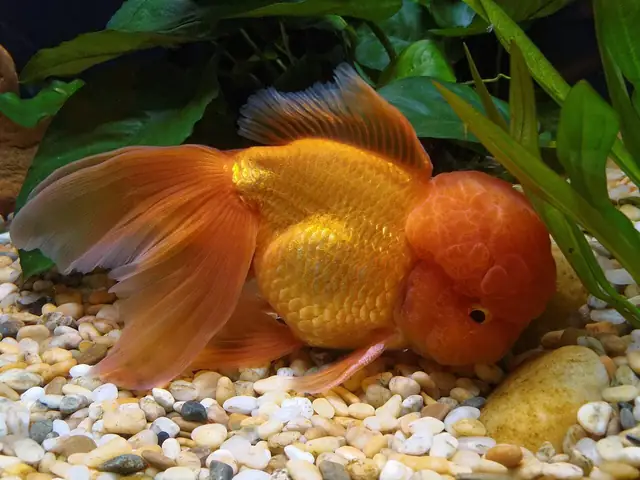 Oranda: No shared temperature: black-barred limias need 75 to 79 °F, orandas 64 to 74 °F.
What a black-barred limia tank needs
A tank of 20 US gallons or more (such as the 20 gallon long) with a cover, and the equipment below.
As an Amazon Associate I earn from qualifying purchases.
Aquarium Co-Op Easy Flow Sponge Filter, Small
A sponge filter gives gentle flow and cannot pull in small fish. It runs from an air pump, with airline tubing and a check valve, all sold separately.
Aqueon PRO QuietFlow Power Filter 10
Rated by the maker for up to 20 US gal, which covers a 20 gallon black-barred limia tank without being built for a far bigger one.
Aqueon QuietFlow Internal Power Filter 15–30 gal
Rated by the maker for 15–30 US gal, which covers a 20 gallon black-barred limia tank without being built for a far bigger one.
hygger Precise Aquarium Heater 100W
Black-barred limias need 75 to 79 °F; most homes run cooler, so a heater holds the temperature.
API Freshwater Master Test Kit
Tests ammonia, nitrite, nitrate and pH, the readings that matter most before and after adding black-barred limias.
Seachem Prime 100 mL
Removes chlorine and chloramine from tap water at every water change.
Fluval Edge Thermometer
Shows the water temperature at a glance, so you know it stays within 75 to 79 °F.
More choices, each with the reason it is in or out: Filters for a 20 gallon tank · Heaters for a 20 gallon tank. We don’t list fish food: any good brand of the foods under Diet will do. Plan the whole tank's equipment →
Common black-barred limia problems
- Mature males are sensitive to water changes: change a little water often rather than a lot at once, at the same temperature.
- Males fight over territory; more females than males spreads it out.
- Adults eat their fry; dense plants give the young somewhere to hide.
Test the water first whenever fish look unwell: see what your readings mean, then match the symptom. For disease, a vet who treats fish can diagnose it and advise treatment.
More to compare
Sources
Name, origin, adult size and temperature checked against Wikipedia: Limia nigrofasciata. pH, hardness, group size, lifespan and minimum tank size are common hobby guidance, not figures from that article. Ranges are the range the species tolerates; aim for the middle. Minimum tank sizes are for an adult group. Drawings are our own; photo credits follow.
Photo credits
Real photographs from Wikimedia Commons, resized and cropped to fit; each is used under the license named.
- Black-barred limia Janet Cremetti, CC BY-SA 2.0, via Wikimedia Commons
- Honey gourami Antoon Dommerholt (Dutch Wikipedia), CC BY-SA 3.0, via Wikimedia Commons
- Shell-dweller cichlid Richard A. Ingebrigtsen, CC BY-SA 3.0, via Wikimedia Commons
- Otocinclus CHUCAO, CC BY-SA 3.0, via Wikimedia Commons
- Forktail blue-eye rainbowfish Dirk Godlinski, CC BY-SA 3.0, via Wikimedia Commons
- Amano shrimp Stefanie Leuker, CC0, via Wikimedia Commons
- Ghost shrimp Smithsonian Environmental Research Center, CC BY 2.0, via Wikimedia Commons
- Mystery snail Gabriel Resende Veiga, CC BY-SA 4.0, via Wikimedia Commons
- Japanese trapdoor snail Judy Gallagher, CC BY 2.0, via Wikimedia Commons
- White cloud mountain minnow Petrtyl, CC BY 4.0, via Wikimedia Commons
- Pea puffer Beta Mahatvaraj, CC BY-SA 4.0, via Wikimedia Commons
- Fancy goldfish Benson Kua, CC BY-SA 2.0, via Wikimedia Commons
- Convict cichlid S. Olkowicz, CC BY 2.5, via Wikimedia Commons
- Jewel cichlid NasserHalaweh, CC BY-SA 4.0, via Wikimedia Commons
- Oranda Lawrencekhoo, CC BY-SA 4.0, via Wikimedia Commons
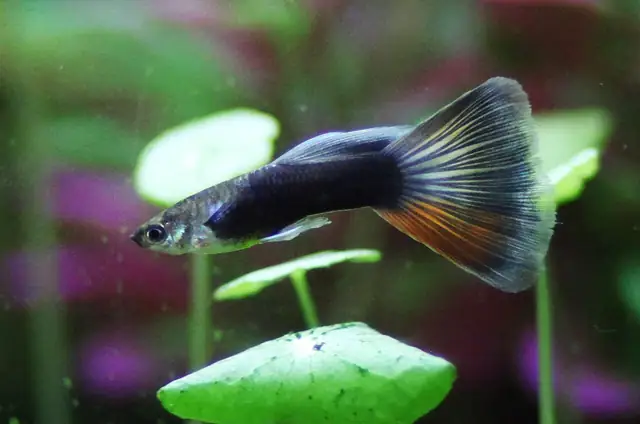
- Guppy Marrabbio2, CC BY-SA 3.0, via Wikimedia Commons
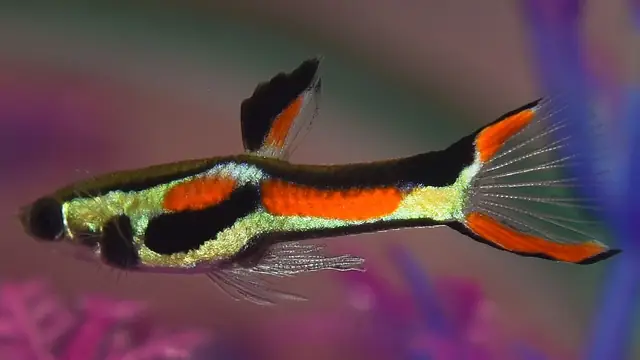
- Endler's livebearer Dgrummon, CC BY-SA 4.0, via Wikimedia Commons
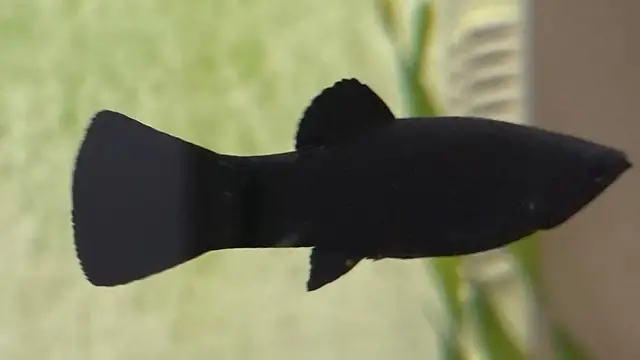
- Molly LPA74, CC BY-SA 4.0, via Wikimedia Commons
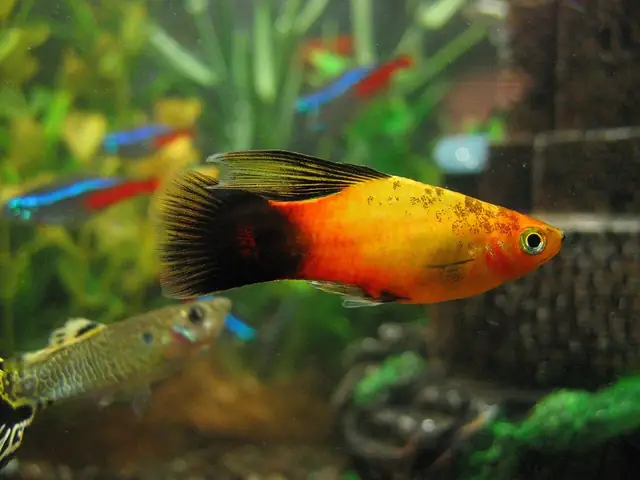
- Platy Monika Korzeniec, CC BY-SA 3.0, via Wikimedia Commons


