
Forktail blue-eye rainbowfish care
Pseudomugil furcatus · Coastal streams of Papua New Guinea
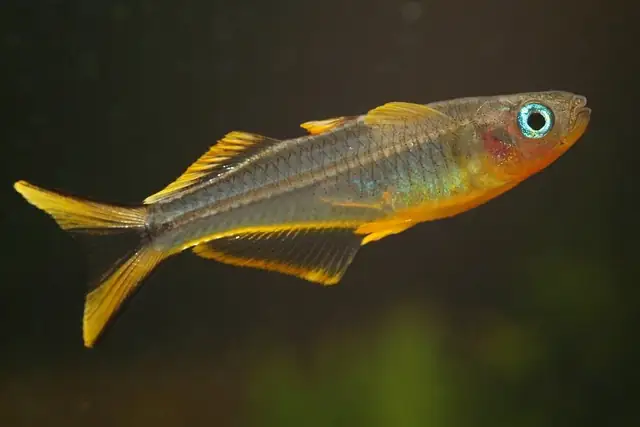
Forktail blue-eyes are small, bright-yellow-finned rainbowfish with blue eyes that live near the surface.
- Tank size
- 10 US gal or larger
- Temperature
- 72 to 80 °F (22 to 27 °C)
- Group size
- 6 or more
- Temperament
- Peaceful
- Adult size
- 2 in
- pH
- 7 to 8
- Hardness (GH)
- 8 to 20 dGH
- Lifespan
- 2 to 3 years
- Diet
- Omnivore
- Care level
- Moderate
In a 10 gallon
20¼ × 10½ × 12 9/16 in outsideHow to keep forktail blue-eye rainbowfish
Forktail blue-eyes are small, bright-yellow-finned rainbowfish with blue eyes that live near the surface. Keep six or more in a 10 gallon or larger planted, covered tank with hard water and gentle flow.
Diet: Omnivore: crushed flakes, micro pellets, small frozen foods. Fish food types compared · how often to feed.
Where they swim: Top of the tank.
Forktail blue-eye rainbowfish tank mates
Share the temperature and water, and neither side eats, nips or bullies the other. Check the full group in the stocking checker.
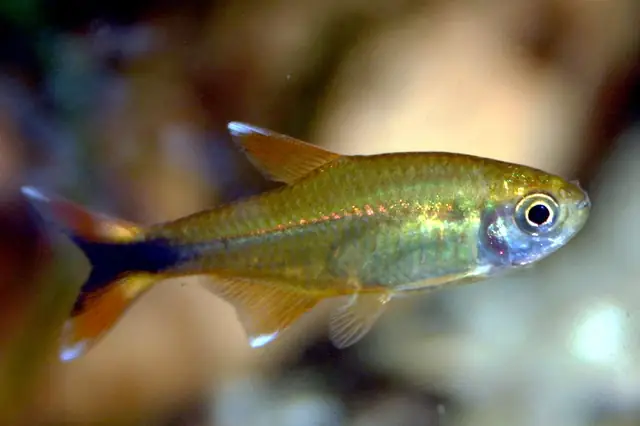
Silvertip tetra
2 in · 20+ gal · 72–82 °F
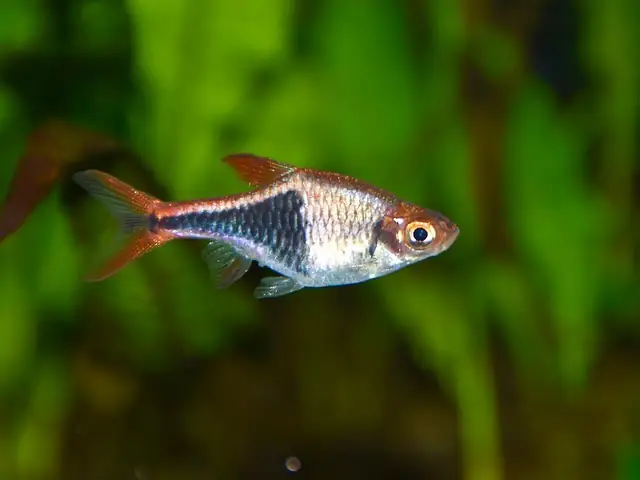
Harlequin rasbora
2 in · 10+ gal · 72–81 °F
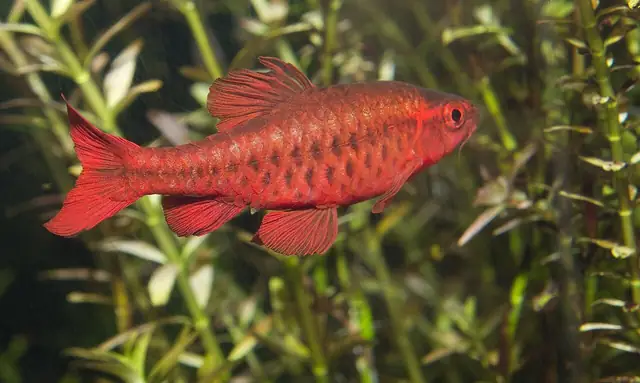
Cherry barb
2 in · 20+ gal · 73–81 °F
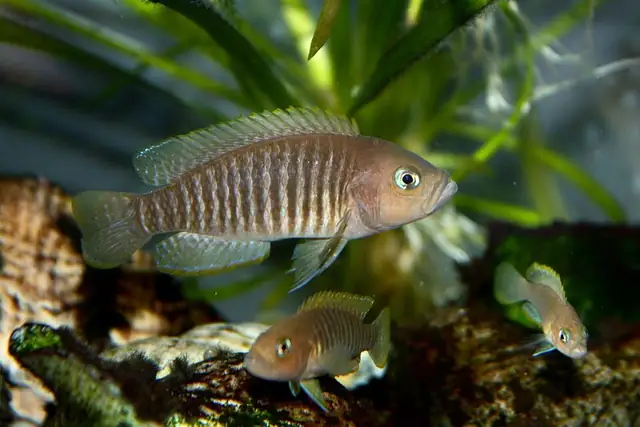
Shell-dweller cichlid
2 in · 10+ gal · 75–80 °F
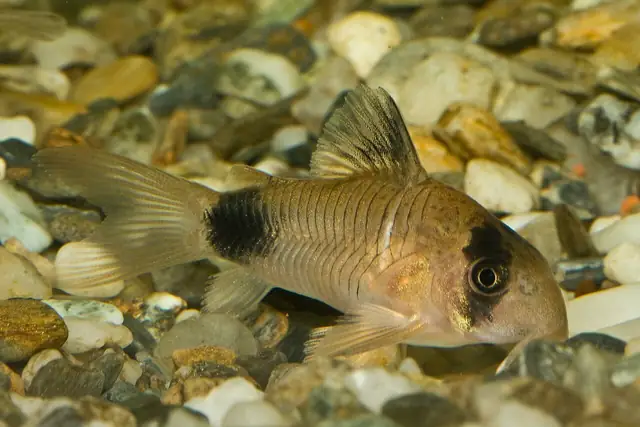
Panda corydoras
2 in · 15+ gal · 68–77 °F
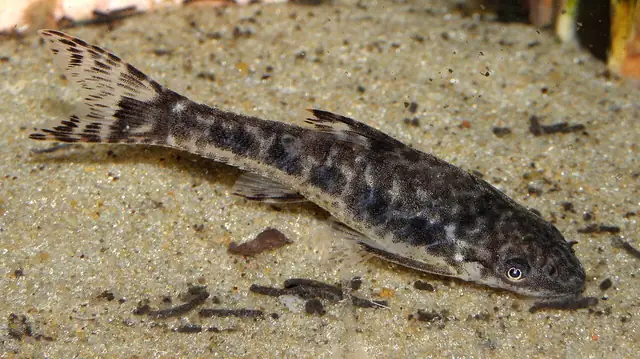
Otocinclus
2 in · 20+ gal · 72–79 °F
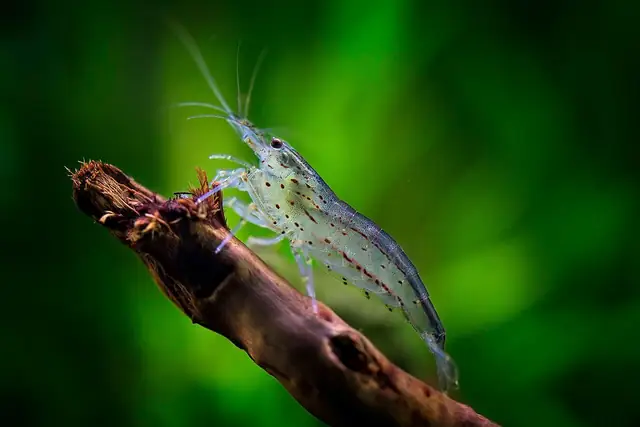
Amano shrimp
2 in · 10+ gal · 68–80 °F
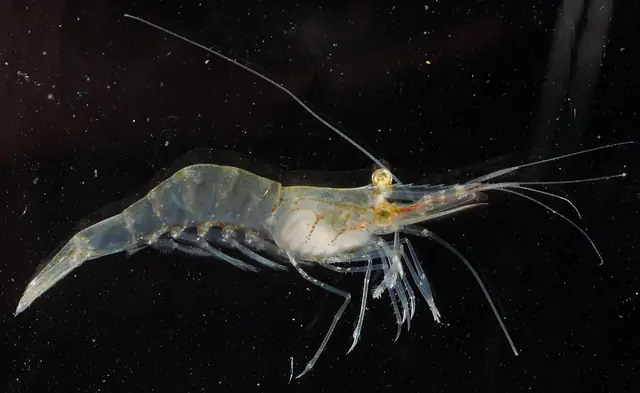
Ghost shrimp
2 in · 5+ gal · 65–80 °F
Keep apart
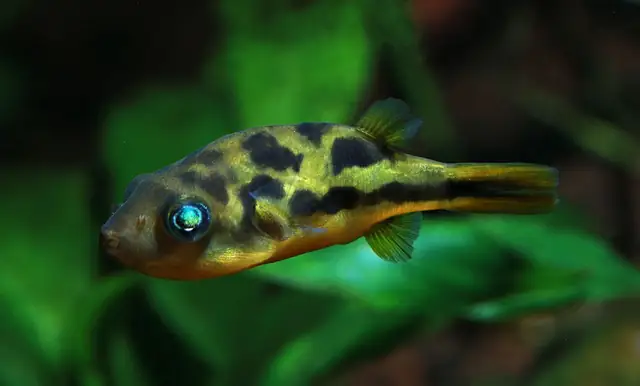 Pea puffer: Pea puffers belong in a tank of their own.
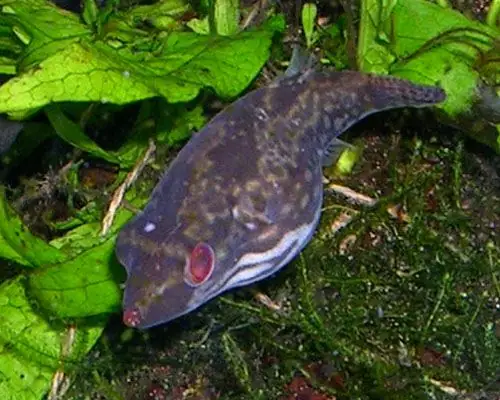 Red-tail dwarf puffer: Red-tail dwarf puffers belong in a tank of their own.
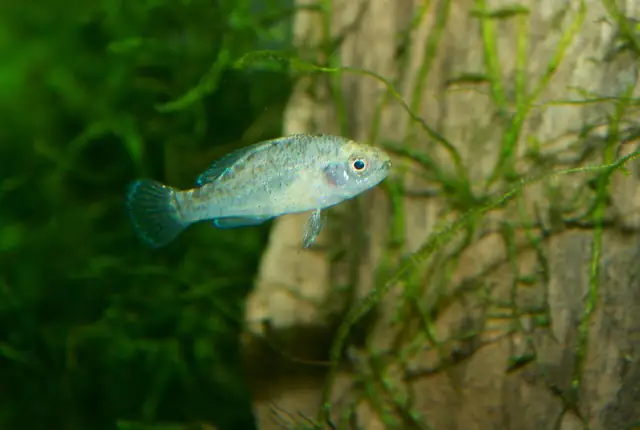 Everglades pygmy sunfish: Everglades pygmy sunfish belong in a tank of their own.
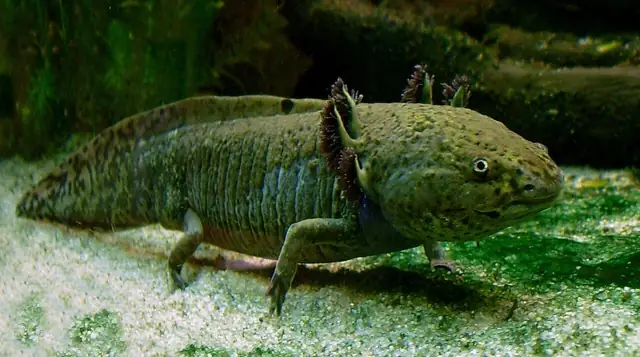 Axolotl: Axolotls belong in a tank of their own.
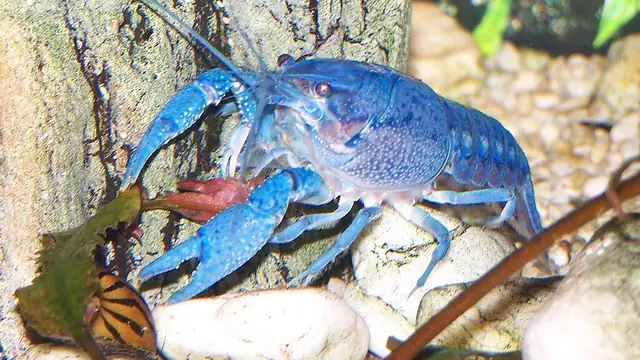 Electric blue crayfish: Electric blue crayfish belong in a tank of their own.
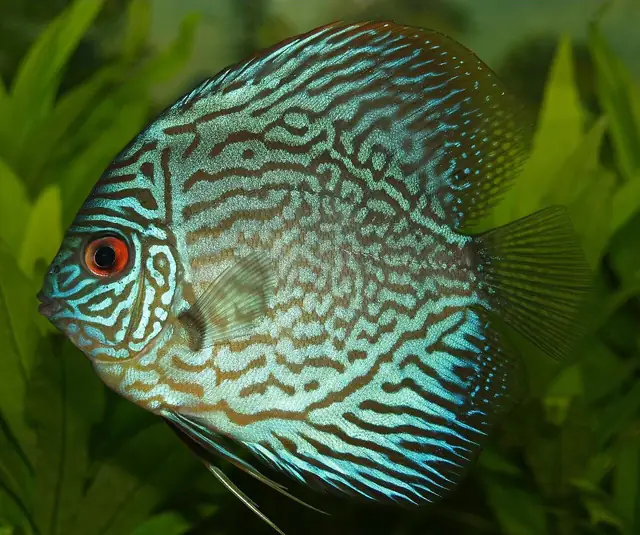 Discus: No shared temperature: forktail blue-eye rainbowfish need 72 to 80 °F, discus 82 to 88 °F.
What a forktail blue-eye rainbowfish tank needs
A tank of 10 US gallons or more (such as the 10 gallon) with a tight lid (they jump), and the equipment below.
As an Amazon Associate I earn from qualifying purchases.
Aquarium Co-Op Easy Flow Sponge Filter, Small
A sponge filter gives gentle flow and cannot pull in small fish. It runs from an air pump, with airline tubing and a check valve, all sold separately.
hygger AquaFall Aquarium Filter, S
Rated by the maker for 7–10 US gal, which covers a 10 gallon forktail blue-eye rainbowfish tank without being built for a far bigger one.
Aqueon QuietFlow Internal Power Filter 5–15 gal
Rated by the maker for 5–15 US gal, which covers a 10 gallon forktail blue-eye rainbowfish tank without being built for a far bigger one.
hygger Precise Aquarium Heater 50W
Forktail blue-eye rainbowfish need 72 to 80 °F; most homes run cooler, so a heater holds the temperature.
API Freshwater Master Test Kit
Tests ammonia, nitrite, nitrate and pH, the readings that matter most before and after adding forktail blue-eye rainbowfish.
Seachem Prime 100 mL
Removes chlorine and chloramine from tap water at every water change.
Fluval Edge Thermometer
Shows the water temperature at a glance, so you know it stays within 72 to 80 °F.
More choices, each with the reason it is in or out: Filters for a 10 gallon tank · Heaters for a 10 gallon tank. We don’t list fish food: any good brand of the foods under Diet will do. Plan the whole tank's equipment →
Common forktail blue-eye rainbowfish problems
- Short-lived by nature (two to three years); a breeding group keeps the tank going.
Test the water first whenever fish look unwell: see what your readings mean, then match the symptom. For disease, a vet who treats fish can diagnose it and advise treatment.
More to compare
Sources
Name, origin and adult size checked against Wikipedia: Pseudomugil furcatus. Temperature, pH, hardness, group size, lifespan and minimum tank size are common hobby guidance, not figures from that article. Ranges are the range the species tolerates; aim for the middle. Minimum tank sizes are for an adult group. Drawings are our own; photo credits follow.
Photo credits
Real photographs from Wikimedia Commons, resized and cropped to fit; each is used under the license named.
- Forktail blue-eye rainbowfish Dirk Godlinski, CC BY-SA 3.0, via Wikimedia Commons
- Silvertip tetra Filtropat; cropped by Kyknos, CC BY-SA 3.0, via Wikimedia Commons
- Harlequin rasbora NasserHalaweh, CC BY-SA 4.0, via Wikimedia Commons
- Cherry barb Brian Gratwicke, CC BY 2.0, via Wikimedia Commons
- Shell-dweller cichlid Richard A. Ingebrigtsen, CC BY-SA 3.0, via Wikimedia Commons
- Panda corydoras Chronotopian, CC BY-SA 3.0, via Wikimedia Commons
- Otocinclus CHUCAO, CC BY-SA 3.0, via Wikimedia Commons
- Amano shrimp Stefanie Leuker, CC0, via Wikimedia Commons
- Ghost shrimp Smithsonian Environmental Research Center, CC BY 2.0, via Wikimedia Commons
- Pea puffer Beta Mahatvaraj, CC BY-SA 4.0, via Wikimedia Commons
- Red-tail dwarf puffer Neale Monks (English Wikipedia), CC BY-SA 3.0, via Wikimedia Commons
- Everglades pygmy sunfish Brian Gratwicke, CC BY 2.0, via Wikimedia Commons
- Axolotl LoKiLeCh, CC BY-SA 3.0, via Wikimedia Commons
- Electric blue crayfish Dirk Rohlfs, Public domain, via Wikimedia Commons
- Discus Patrick Farrelly, Public domain, via Wikimedia Commons
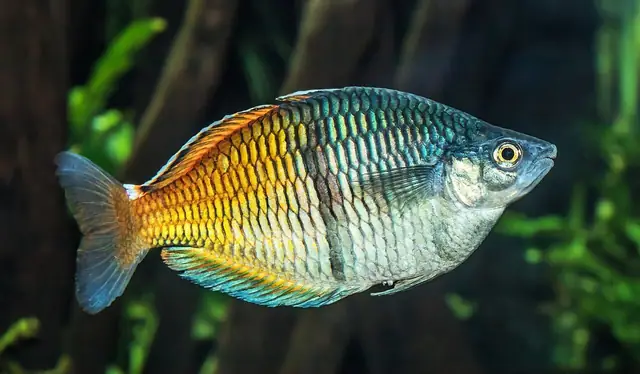
- Boesemani rainbowfish H. Zell, CC BY-SA 3.0, via Wikimedia Commons
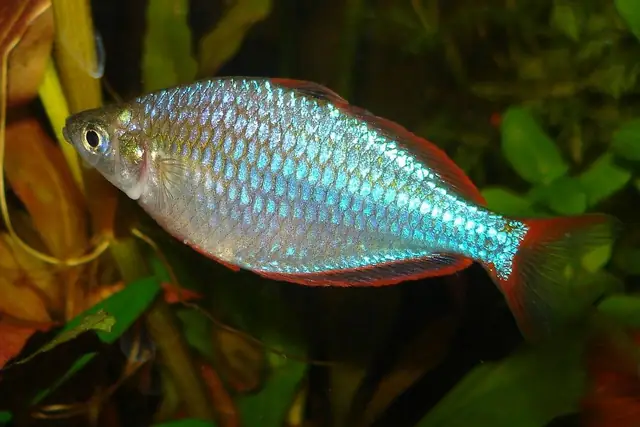
- Dwarf neon rainbowfish Leo-nie-weh-oh; cropped by Der Regenbogenfisch, Public domain, via Wikimedia Commons
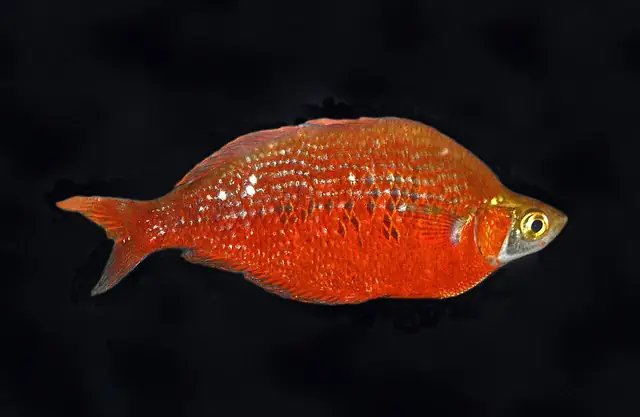
- Red rainbowfish Hectonichus, CC BY-SA 3.0, via Wikimedia Commons
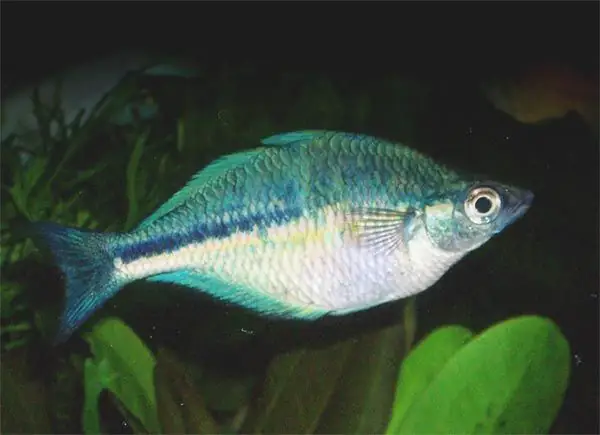
- Turquoise rainbowfish Thomnight, CC BY-SA 2.0, via Wikimedia Commons


