150 gallon fish tank: dimensions and equipment

A six-foot tank with the 125 gallon’s footprint and nearly 30 inches of height.

About 1,800 lb filled, by Aqueon’s figures: it needs a stand made for it and a floor a contractor has checked. Nearly 30 inches of water is out of reach for most arms, so plan long tools, and plants at the bottom need a strong light.

72½ in long18½ in deep29½ in high
See front view

QuietFlow Canister Filter 400 shown for scale. Positions and waterline are approximate; the checks below still apply.

Plan equipment for this tank →

Outside size of the Aqueon Standard 150. For the water it holds, measure inside the glass.

What lives in a 150 gallon

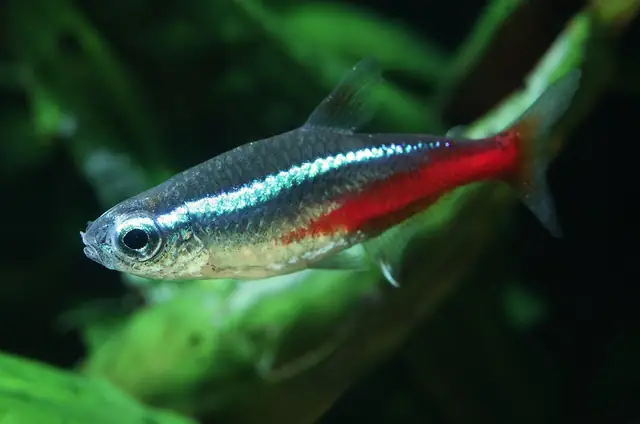
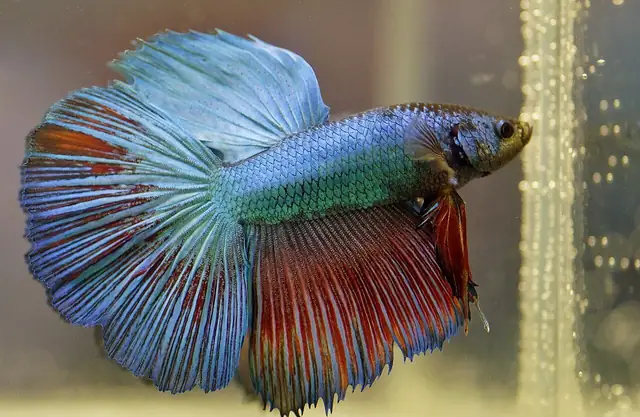
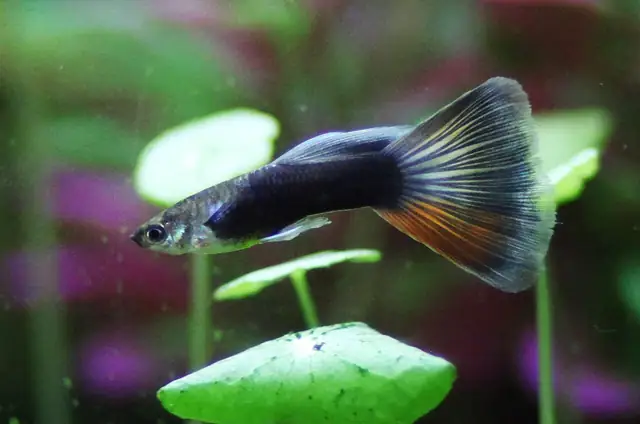
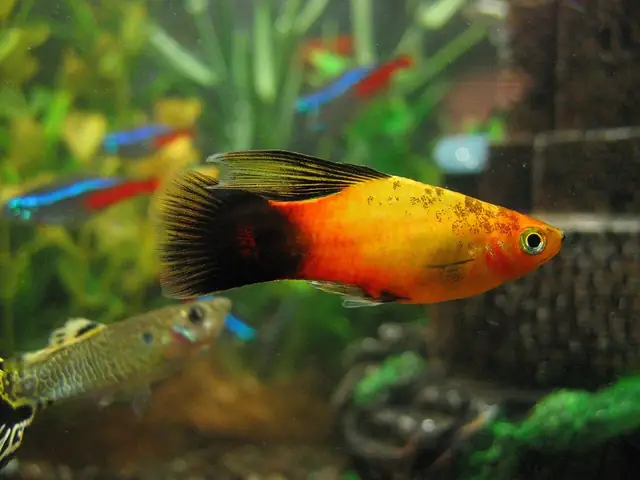
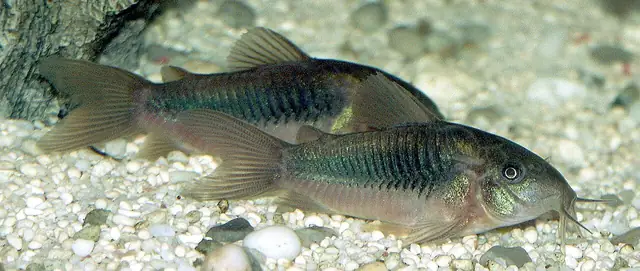
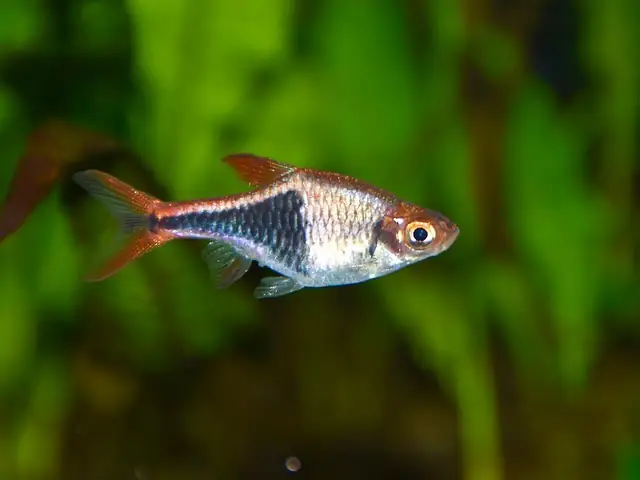
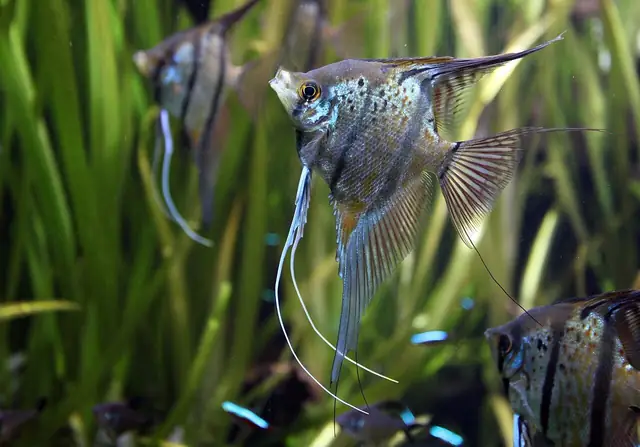
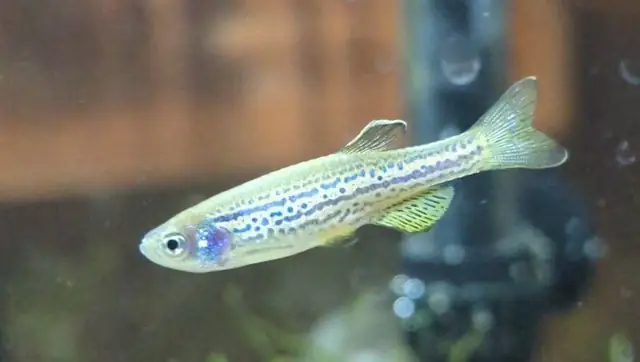
241 fish and invertebrates in our guide fit a 125 gallon tank as adults. Here is an example group drawn to scale, then the most popular choices.

All fish for a 125 gallon →
To scale: 6 Boesemani rainbowfish, 8 bronze corydoras, an angelfish and a bristlenose pleco at adult size. An example group; check your own fish in this tank.

This tank, its lid and its stand

Tank format
Aqueon Standard 150; 72½ × 18½ × 29½ in outside
Empty tank weight
281 lb
Matching lid or top
100129101
Lid fit
72 × 18 in, three-piece top for the 125 and 150 formats
Matching stand
We haven’t matched a stand: use one the maker approves for this tank.

These sizes are for the Aqueon Standard 150; another brand’s 150 gallon can differ. Lids fit a tank model, not a gallon number.

Box sizes won’t tell you if a lid fits: measure the ledges the lid rests on, the openings either side of the center brace and the space for the strip at the back. Check the lid is the one made for this tank before you fit it.

Work out the filled weight → Add your substrate, rock, equipment and stand to see the total on the floor.

What to buy, in order

  • Buy the lid made for this tank (see below) and a stand built to carry it full, with room to open the cabinet and reach your equipment.

    Check stand and lid fit →
  • Choose gravel or soil and how deep you want it, then work out how much to buy from the inside size of the tank. Bags of different substrates weigh differently, so a pounds-per-gallon rule is only a rough guide.

    Work out how much substrate →
  • A filter rated for less than 150 gallons isn’t a match; tanks this size usually run a large canister, two filters or a sump.

    Compare filters →
  • A sponge filter needs an air pump, airline and a check valve; choose a pump strong enough for your water depth. A hang-on-back or canister filter doesn’t need one, though a battery air pump makes a good backup in a power cut.

    Set up an air pump →
  • Decide the water temperature your fish need and how cold the room gets. Size the heater from the maker’s chart and your actual water volume, and check it with a separate thermometer.

    Size a heater →
  • Check the light spans your tank and how it mounts. For plants, compare PAR at your water depth where the maker publishes it; watts alone don’t tell you how much light reaches the bottom.

    Check light fit →
  • Get a kit that tests ammonia, nitrite, nitrate and pH; most master kits leave out GH and KH, so add those if your fish need them. Dose conditioner for new water by the bottle’s label.

    How to test your water →
  • Plan a hose that drains and refills: a 20 to 30 percent change is 30 to 45 gallons.

    Choose water-change tools →
  • Keep plugs dry and labeled, with a drip loop on every cord as the manuals show. If you add a battery backup air pump, test it before you need it.

    Set up the power safely →

Then set it all up, step by step, and cycle the tank before you add fish.

Checkmarks aren’t saved when you leave the page; print it to keep them.

Measure before you buy

Outside arrows include glass and trim. Measure between the inside glass faces for water volume.
The water stops below the rim, and gravel and decor take up some of the space, so your tank holds less than its size suggests.
  • The tank’s outside size and the stand it needs.
  • The inside size up to the waterline, and how much room gravel and rock take, for your actual water volume.
  • The rim trim, the gap to the wall, the lid openings and where the light mounts.
  • The cabinet opening, the hose route and room to lift out filter media.
  • How you’ll carry water, the bucket size and where the outlets are.

With those numbers, use the water volume calculator and the electricity cost calculator. The first-year cost calculator keeps a line for every supply, even before you know its price.

Filters rated for this tank size

The smallest filters their makers rate for a 150 gallon. Compare the space they need and the upkeep, then choose for the fish and plants you plan to keep. Each is rated for a 150 gallon on its own, so with two of them, one keeps the water moving if the other stops.

See every filter →

As an Amazon Associate I earn from qualifying purchases.

Drawing of an aquarium filter (not a photo of the Aqueon QuietFlow Canister Filter 400)

Aqueon’s catalog rates it for 100–150 US gal, its manual and product page for up to 155; we list it for 100–150 gal, where they agree. 400 gph.

Aqueon QuietFlow Canister Filter 400

Aqueon’s canister filter, with three ways to return the water: a spray bar, a water director, or a polishing unit that hangs on the rim and holds a Large Aqueon cartridge as the last, finest stage. It comes with its foam, carbon, bio-balls and bio-ceramic rings packed in the media baskets, quick-disconnect valves and hoses.

Consider: It needs a 19.875 in tall spot in the cabinet, no more than 4½ ft below the water. Its rim-hung polishing unit takes a cartridge you can change in a minute without opening the canister.

Drawing of an aquarium filter (not a photo of the EHEIM professionel 4+ 600 (2275))

Manufacturer-rated for 63–158 US gal aquariums.

EHEIM professionel 4+ 600 (2275)

EHEIM’s square canister filter with a priming button, a prefilter on top that catches coarse dirt and lift-out media baskets, holding 1.6 US gal of filter media; its pump moves 330 US gal an hour and lifts water up to 5 ft 11 in.

Consider: The square canister is 9.4 in wide and 9.6 in deep, so it needs more cabinet floor than EHEIM’s round classic for the same tank; in return the prefilter on top takes the coarse dirt, and the baskets lift out for cleaning.

Drawing of an aquarium filter (not a photo of the EHEIM classic 600 (2217))

Manufacturer-rated for 47–159 US gal aquariums.

EHEIM classic 600 (2217)

EHEIM’s round canister filter with a simple pump head, holding 1.6 US gal of filter media; its pump moves 264 US gal an hour and lifts water up to 7 ft 6 in.

Consider: It has no priming button and no hose valves in the box: you start it by sucking on the outlet elbow until water flows, as EHEIM’s manual shows.

Photo credits

Real photographs from Wikimedia Commons, resized and cropped to fit; each is used under the license named.